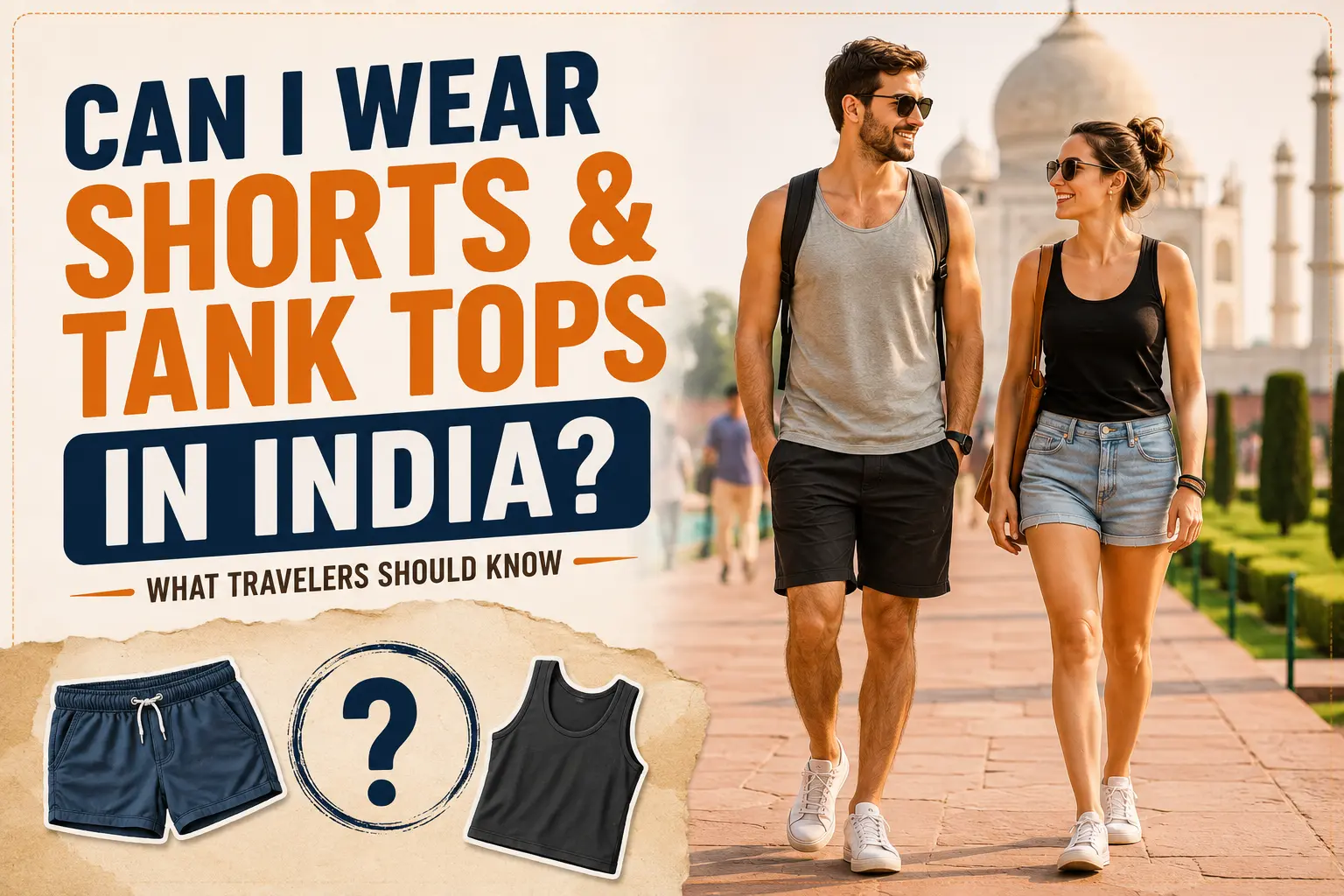
Can I Wear Shorts and Tank Tops in India?
A Tour Guide's Completely Honest Answer
By Mukesh Sain | Founder, My Dream India Tour | Jaipur, Rajasthan Last Updated: 2026 | Reading Time: 10 minutes
I get asked this question more than almost any other.
It comes in my WhatsApp messages at midnight from nervous first-time visitors in New York. It arrives in emails from couples in London planning their Rajasthan honeymoon. A German photographer once spent twenty minutes on our first phone call asking variations of this single question before he was satisfied with my answer.
And honestly? I understand why.
India's dress code is one of those topics where the internet gives you ten different answers — some too strict, some too casual, and almost none of them specific enough to actually help you pack.
So here is my answer. Not a generic travel blog answer. My answer — from ten years of standing at the gates of Amber Fort, Mehrangarh, the Taj Mahal, and dozens of temples across Rajasthan, watching international tourists navigate this exact question in real time.
The short answer is: it depends entirely on where you are and what you are doing.
The longer answer — the one that will actually help you pack and plan — is below.
Can you wear shorts in India?
Yes — in cities, beach destinations, hotels, and casual outdoor settings. No — at temples, mosques, gurudwaras, forts with active shrines, and conservative rural areas.
Can you wear tank tops in India?
Yes — at beach resorts, hotel pools, and Goa-style destinations. With caution — in city areas, cover with a light scarf or shawl. No — at any religious site, ever.
The single rule that covers 90% of situations: Cover your shoulders and knees whenever you are at a religious site or in a conservative public space. Everywhere else, use your judgement based on your surroundings.
Why India Does Not Have One Dress Code
Before I give you the location-by-location breakdown, I want to explain something that most generic travel articles miss entirely.
India is not a country with one dress code — it is a patchwork of hundreds of cultures, climates, and centuries of tradition. What you wear in a village in Rajasthan might be completely out of place in a temple in Varanasi, or even in a corporate office in Bangalore. The truth? There is no single answer to what is appropriate. But there are clear patterns, deep-rooted norms, and simple rules that help you avoid awkward moments and show respect.
In my decade of guiding guests from the USA, UK, Canada, France, and Germany through India, I have seen two kinds of mistakes:
Mistake 1 — Over-packing conservatively Guests who pack only long trousers and full-sleeved shirts for a two-week Rajasthan trip in April, then suffer genuinely uncomfortable heat that could have been avoided with appropriate lightweight clothing.
Mistake 2 — Under-dressing for the context Guests who turn up at Amber Fort in shorts and a sleeveless top, then spend the next twenty minutes negotiating at the entrance, borrowing scarves, and feeling awkward — starting their most anticipated monument visit on the wrong foot.
Both are entirely avoidable. Here is how.
Section 1 — Shorts and Tank Tops at Temples & Religious Sites
The Answer: No — And This Is Non-Negotiable
Let me be very direct about this because it matters most.
No matter where you go in India, modesty is the quiet rule that holds everything together. For women, that usually means skipping shorts, crop tops, or tank tops that reveal the midriff or shoulders. For men, sleeveless shirts or very short shorts are frowned upon in most public or religious spaces.
At every Hindu temple, Sikh gurudwara, mosque, and Jain shrine you visit in India, the rule is the same: cover your shoulders and cover your knees. No exceptions. No negotiations at the gate.
The most widely followed principle across temples is modest coverage. This means shoulders are covered, knees are covered, the midriff is not visible, clothing is not tight or transparent, and undergarments are not visible.
For Men at Religious Sites: Full-length trousers or loose cotton pants, kurta with pajama pants, and collared shirts or simple t-shirts with sleeves are appropriate. What to avoid: sleeveless shirts, gym tank tops, short shorts, torn jeans, and bare torso.
For Women at Religious Sites: Women should avoid crop tops, tank tops, spaghetti straps, mini-skirts, short shorts, tight leggings, and see-through clothes. A loose cotton top with lightweight trousers or a long skirt is ideal — comfortable, cool, and completely appropriate for every religious site in India.
What Happens If You Turn Up Underdressed?
I have seen this play out at almost every major temple on our tour circuit. Three outcomes are possible:
Outcome 1 — You are turned away at the gate. This happens regularly at South Indian temples with strict dress codes, particularly in Tamil Nadu and Kerala. Bare shoulders, short pants, and revealing outfits are commonly turned away at the gate. You have driven or walked to the temple, paid your entry, and cannot go in. It is a genuinely disappointing and avoidable situation.
Outcome 2 — You are offered a covering to borrow. In places like Tirupati, Varanasi, or Madurai, temple staff may even offer free shawls or dhotis if you are underdressed. It is not punishment — it is hospitality. But you will feel conspicuous and uncomfortable, and it adds unnecessary friction to what should be a wonderful experience.
Outcome 3 — People notice, but say nothing. India is forgiving. If you make a mistake — like wearing shorts to a temple — people will not yell. They might gently guide you. But they will notice. And they will remember.
My honest tour guide advice: none of these outcomes are necessary. A pair of lightweight cotton trousers weighs nothing in your bag and changes everything at every religious site you visit.
Region-Specific Temple Dress Codes
Not all Indian temples have the same level of strictness. Here is what I have learned from experience:
North India Temples (Rajasthan, Delhi, Agra, Varanasi): North India is more relaxed about temple dress codes compared to the south, but modesty is still essential. Amber Fort in Jaipur, for example, contains the Shila Devi Temple within its walls — covered shoulders and knees are required to enter this area. Most North Indian temples will accommodate you with a scarf or lend you a covering, but arriving prepared is always better.
South India Temples (Tamil Nadu, Kerala, Karnataka): Tamil Nadu and Kerala have strict traditional attire rules. Men may have to enter the sanctum bare-chested and women are advised to wear sarees or full-length ethnic wear.
This surprises many Western visitors — the requirement in some South Indian temples is not just modest clothing but specifically traditional Indian clothing. The famous Padmanabhaswamy Temple in Kerala and Sri Venkateswara Temple in Tirupati both have very strict dress codes enforced at the entrance. Men usually wear a dhoti or a mundu. In many cases, shirts, T-shirts, and upper garments are removed before entering the inner temple areas. Women should wear sarees, salwar kameez, long skirts with proper tops, or other modest traditional clothes. Western outfits are usually not the safest choice here.
Sikh Gurudwaras: Everyone must cover their head with a scarf or bandana — they are often provided. No leather items are allowed inside. Shoes are removed before entering. Both men and women wear modest clothing — no shorts, tank tops, or revealing outfits. The Golden Temple in Amritsar has a specific scarf requirement that is strictly enforced — always carry one.
Mosques: At mosques and Sufi shrines, conservative attire is non-negotiable. Women should cover arms and legs, and in many places also cover their head with a scarf, while men should avoid shorts and sleeveless tops.
Section 2 — Shorts and Tank Tops in Indian Cities
The Answer: It Depends on the City and Context
This is where the answer becomes more nuanced — and where most generic travel advice either gets too strict or too casual.
The short answer is yes — you can wear shorts in India. Although in many regions most local people do not wear shorts, in the bigger cities like Mumbai and much of Delhi, local people are used to seeing foreigners and you will not have any issues wearing shorts as a tourist.
Here is my honest city-by-city breakdown from experience:
Delhi: In South Delhi's modern neighbourhoods — Hauz Khas, Connaught Place, Khan Market — shorts and casual tops are genuinely fine and you will see plenty of local young people dressed similarly. In Old Delhi — Chandni Chowk, Jama Masjid area, Lal Kuan Bazaar — I strongly recommend covering up. These are conservative areas where modest clothing is both more respectful and more practical (the lanes are narrow and crowded, and conservative dress attracts significantly less unwanted attention).
Jaipur: Jaipur's old walled city and bazaar areas are moderately conservative. In the Pink City's heritage hotels, restaurants, and Amber Fort road, shorts for men are acceptable. For women, a light scarf over a sleeveless top covers all situations comfortably. The city's modern areas — Malviya Nagar, C-Scheme — are entirely relaxed about Western clothing.
Mumbai: India's most cosmopolitan city is the most relaxed about Western dress. Shorts and tank tops are completely normal in South Mumbai's tourist areas, Bandra's cafes and bars, and along Marine Drive. The main exception: the Haji Ali Dargah mosque, which has its own modest dress code.
Varanasi: I advise all my guests to dress conservatively throughout Varanasi — not because it is strictly required in the city streets, but because the entire city is a sacred space to its residents. The ghats, the temples, the alleyways — all are places of active worship and daily religious practice. Lightweight loose trousers and a covered top show the respect this extraordinary city deserves.
Smaller Towns and Villages: In more relaxed tourist hubs you will see exceptions, but conservative clothing generally attracts less unwanted attention and is considered more respectful, especially around families. In rural Rajasthan, in smaller desert towns between Jodhpur and Jaisalmer, in village settings — dress modestly. It is a sign of cultural awareness that local people notice and genuinely appreciate.
Section 3 — Where Shorts and Tank Tops Are Completely Fine
Now for the good news — and there is plenty of it.
Goa & Beach Destinations
Goa operates by its own rules — and those rules are very comfortable for Western tourists. Beachwear on Goa's beaches is entirely appropriate and you will see Indian and international tourists in the same. At the beach, bikinis and swimwear are generally acceptable in resort areas.
The key Goa distinction: beach clothing stays at the beach. If you are heading from the beach to a cafe, restaurant, or Goa's beautiful Portuguese-era churches, a cover-up is appropriate.
Kerala Beach Areas
Kerala's coastal resorts and beach towns — Varkala, Kovalam, Marari — are similarly relaxed about beach and resort wear. A swimsuit at the pool or beach is fine. A tank top for a coconut on the beach is fine. Walking through a local fishing village in a bikini is not.
Hotel Pools and Resorts
Every hotel pool in India — from a Jaipur heritage hotel to a Kerala beachside resort — is a space where swimwear and casual resort wear is entirely appropriate. India's luxury hotels cater to an international clientele and pool dress codes are aligned with global hotel standards.
Modern Restaurants, Cafes and Bars
In India's major cities — Delhi, Mumbai, Bengaluru, Jaipur's modern areas — casual Western clothing including shorts and casual tops is perfectly fine at restaurants and cafes. Upscale dining at a heritage hotel or a fine restaurant may call for something slightly smarter, but casual wear is widely accepted.
Outdoor Activities and Nature
For wildlife safaris at Ranthambore or Jim Corbett, lightweight quick-dry trousers are recommended over shorts simply for practical reasons — sun protection, insect bites, and the dust of an open jeep. But comfort-appropriate clothing for active outdoor activities is entirely reasonable.
Section 4 — My Practical Packing Advice
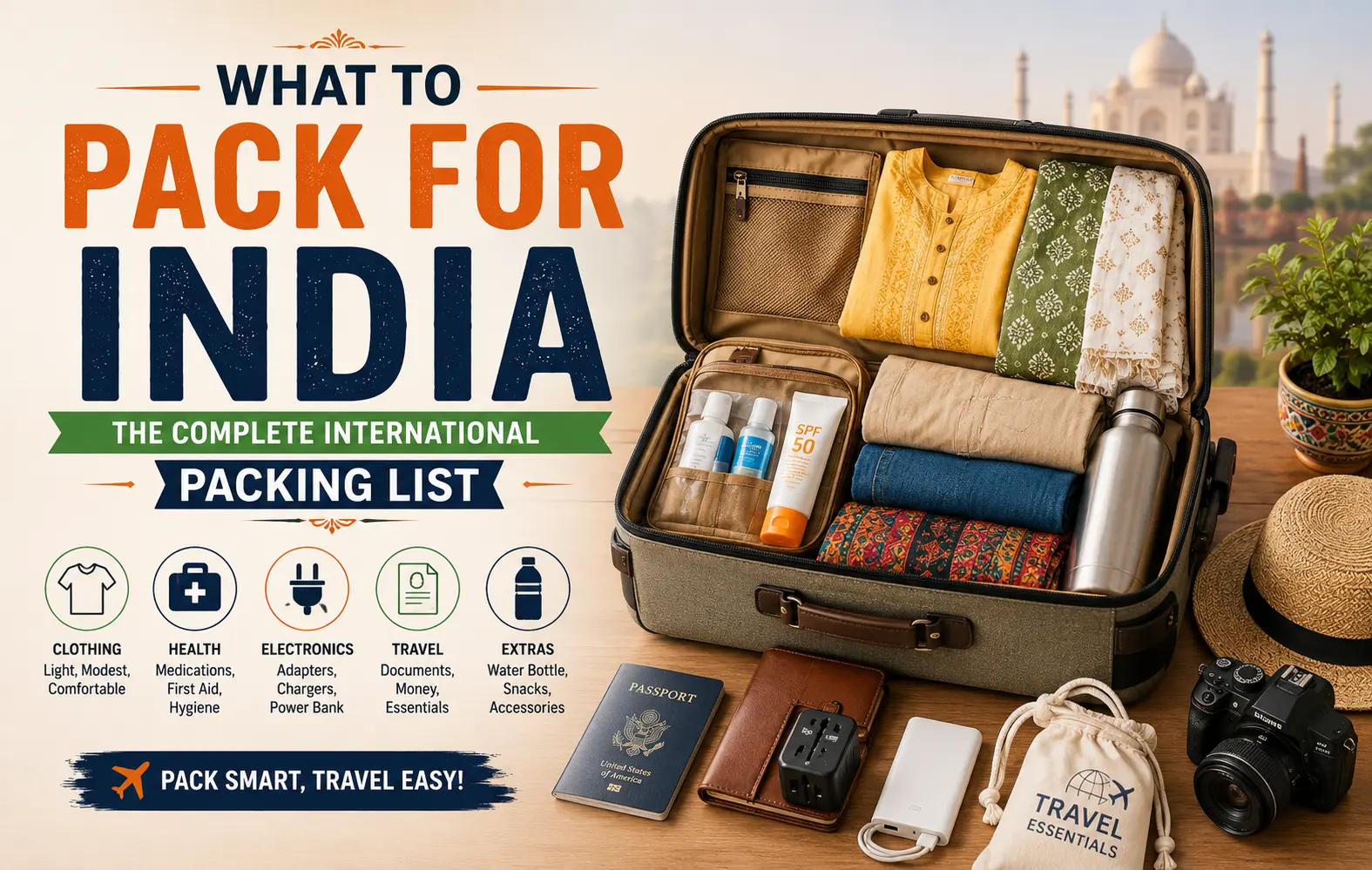
After ten years of pre-trip briefings with international guests, here is the clothing system I recommend for a standard Rajasthan or North India tour:
The One-Scarf Solution
I almost always carry a shawl or scarf which can be used to cover up when necessary, which I drape over my shoulders.
A lightweight cotton scarf or pashmina is the single most versatile India travel item. It turns a sleeveless top into a temple-appropriate outfit in three seconds. It covers your head at a gurudwara. It protects your shoulders from Rajasthan's midday sun at open-air fort battlements. It doubles as a blanket on an air-conditioned overnight train.
Pack one light cotton scarf and one warmer pashmina. Or — as I suggest to most of my guests — buy a beautiful Jaipur pashmina from the old city bazaar on Day 1. You will use it every single day and it becomes one of your most treasured India souvenirs.
The Layering System
Rather than choosing between fully conservative and fully casual clothing, think in layers:
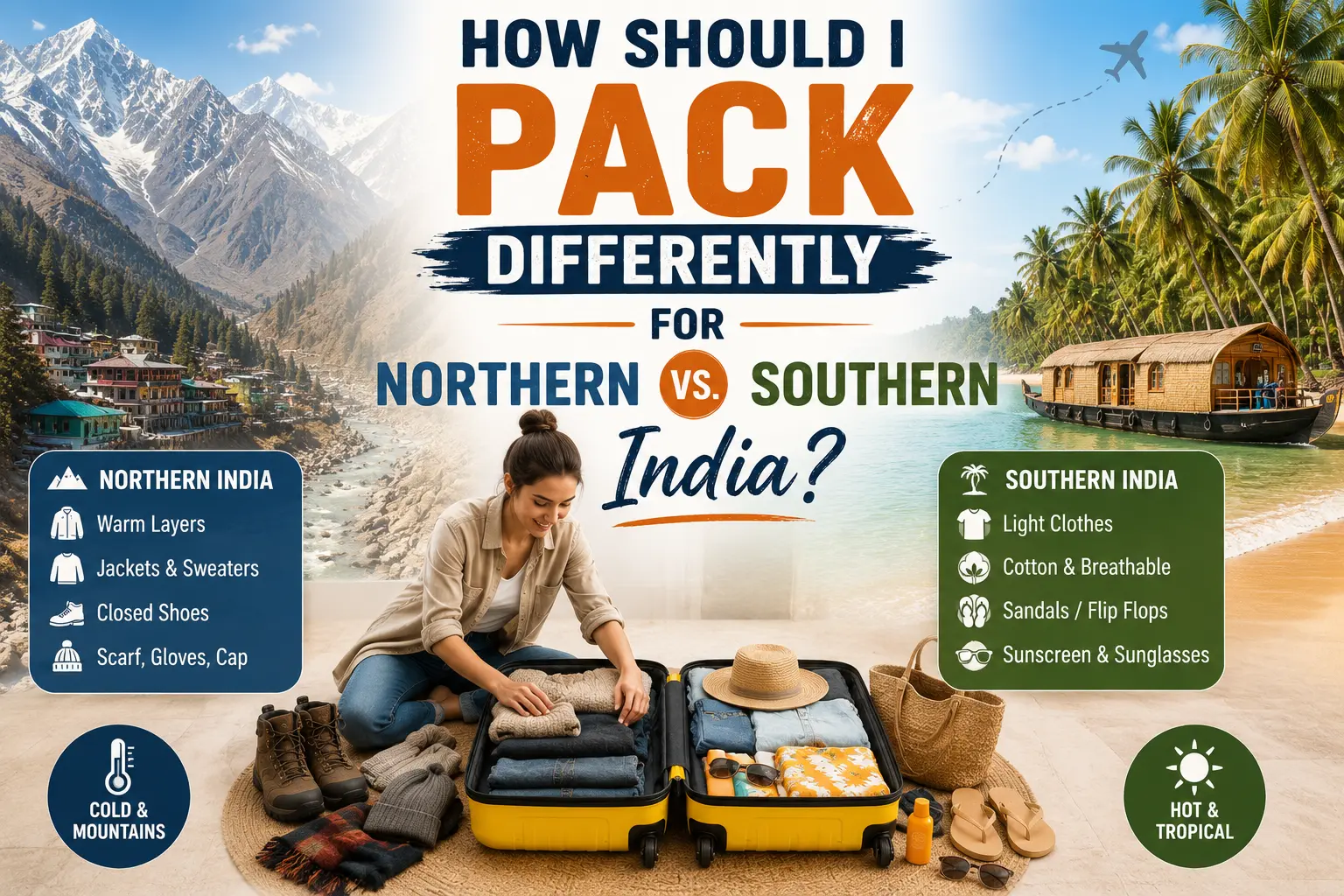
Base layer: Your comfortable Western clothing — a tank top or casual short-sleeved top, lightweight shorts or summer dress.
Layer 2: A light linen or cotton over-shirt, or a loose cotton top with sleeves. This goes on for temples, conservative areas, and outdoor heat protection.
Scarf / pashmina: Always in your daypack. Goes on in seconds for temple entries, gurudwara visits, and conservative market areas.
This system means you are never overdressed for India's heat and never underdressed for any cultural context.
Specific Recommendations for Women
Women often feel more at ease in loose trousers with tunic-style tops, maxi dresses with a light scarf, or locally bought salwar kameez sets.
My additional recommendation: buy a kurta (Indian-style long tunic) in Jaipur's markets on Day 1 or 2. They are beautiful, inexpensive (₹300–₹800), incredibly comfortable in Rajasthan's heat, and culturally appropriate everywhere. My female guests from New York, London, Paris, and Berlin consistently end up wearing their Jaipur kurtas every day for the rest of their trip.
Specific Recommendations for Men
Men typically choose long trousers or jeans with shirts or polos. My specific advice: pack 2 pairs of lightweight linen trousers (not jeans — too heavy and hot in Rajasthan), 3 to 4 breathable cotton or linen shirts, and one pair of shorts for hotel use. This combination covers every situation you will encounter on a standard North India or Rajasthan tour.
Section 5 — Quick Reference Guide
WHERE Shorts & Tank Tops Are Fine
|
Location
|
Shorts
|
Tank Top
|
|
Hotel pool / resort
|
Yes
|
Yes
|
|
Goa beach
|
Yes
|
Yes
|
|
Kerala beach resort
|
Yes
|
Yes
|
|
City cafe / restaurant
|
Men OK
|
With scarf
|
|
Modern city areas (Mumbai, Delhi South)
|
Yes
|
With scarf
|
|
Fort exterior / non-religious areas
|
Men OK
|
With scarf
|
WHERE Shorts & Tank Tops Are NOT Appropriate
|
Location
|
Shorts
|
Tank Top
|
|
Hindu temples
|
No
|
No
|
|
Mosques
|
No
|
No
|
|
Sikh gurudwaras
|
No
|
No
|
|
Jain temples
|
No
|
No
|
|
Fort interiors with active shrines
|
No
|
No
|
|
Rural villages
|
Not recommended
|
Not recommended
|
|
Conservative old city bazaars
|
Not recommended
|
Not recommended
|
|
Varanasi ghats
|
Not recommended
|
Not recommended
|
Section 6 — A Note on Cultural Respect
I want to end this guide with something that goes beyond practical dress code advice — because it gets to the heart of why this question matters.
The goal is not to dress like an Indian. It is to dress with awareness. To honour the culture you are stepping into. To show that you understand this is not just about fabric — it is about history, belief, and community. When you wear a simple cotton kurta or drape a scarf over your shoulders, you are not just covering up. You are opening a door. A door to deeper conversations, unexpected invitations, and real connections.
In ten years of guiding international tourists through India, the guests who connected most deeply with the country — who came away genuinely moved and changed by their experience — were almost always the ones who dressed with awareness.
Not because India demands it of you. But because when you show up to a sacred space with the respect its residents show it every day, something shifts. The interaction at the temple gate becomes a conversation instead of a negotiation. The local woman in the Jaisalmer bazaar who sees you in a dupatta smiles and gestures to her own. The priest at the Amber Fort temple blesses you without hesitation.
India's dress code is not a barrier. Understood correctly, it is an invitation.
One Last Word — From a Decade on India's Cobblestones
The dress code question is really a deeper question in disguise. It is asking: how do I show up in India as a respectful guest?
And the answer is simpler than any packing list can capture.
Pay attention to where you are. Look at what the people around you are wearing. When in doubt, cover up — it costs nothing and gives a great deal. Buy a kurta and a pashmina on Day 1 and wear them with pride.
And remember: India is extraordinarily forgiving of honest mistakes made with genuine goodwill. The people you will meet at Amber Fort's temple gate, at Varanasi's ghats, at the Golden Temple in Amritsar — they care infinitely more about the spirit in which you arrived than the precise thread count of your clothing.
Arrive with an open heart. The right clothes will follow naturally from that.
Feel free to reach out with any questions about what to pack or how to prepare for your India journey. I read and respond to every message personally. You can email us at mydreamindiatour@gmail.com or WhatsApp us directly at +91-87695-95984. We are always happy to help you plan a safe, comfortable, and truly unforgettable India journey.
Plan Your India Tour with My Dream India Tour
We are a Jaipur-based private tour operator specialising in fully customised India tour packages for international travellers from the USA, UK, Canada, France, Germany, and beyond.
Every guest receives a personalised pre-trip India briefing covering clothing, packing, cultural etiquette, and everything else you need to arrive prepared and confident.
WhatsApp / Call: +91-87695-95984 | +91-70625-12828
Email: mydreamindiatour@gmail.com
Website: www.mydreamindiatour.com
Based in: Jaipur, Rajasthan, India
Rated #186 of 1,161 Tours & Activities in Jaipur — TripAdvisor
© 2026 My Dream India Tour Author: Mukesh Sain, Founder & Senior Tour Guide, Jaipur, Rajasthan
Frequently Asked Questions
Q: Can I wear shorts while visiting the Taj Mahal? Yes — the Taj Mahal complex does not have a strict shorts prohibition for the gardens and exterior areas. However, as the complex contains religious elements and is a place of deep cultural significance, lightweight trousers are more appropriate and respectful than shorts. If you are visiting the mosque within the Taj complex, shorts are not permitted.
Q: Can women wear sleeveless tops in India? Short sleeves are generally fine in most public spaces, but sleeveless tops may feel out of place in small towns and religious sites. Covering shoulders is a good guideline when in doubt. In practice: sleeveless tops with a scarf or light cardigan cover all situations comfortably.
Q: What happens if I accidentally wear shorts to a temple? In places like Tirupati, Varanasi, or Madurai, temple staff may even offer free shawls or dhotis if you are underdressed. It is not punishment — it is hospitality. However, at stricter temples you may simply be turned away. Always carry a scarf in your daypack as a precaution.
Q: Can men wear shorts in Rajasthan? In Rajasthan's cities and tourist areas, shorts for men are generally acceptable in non-religious contexts — hotel areas, restaurants, modern city neighbourhoods. For fort visits and heritage sightseeing, lightweight trousers are more appropriate and comfortable (fort cobblestones make shorts less practical anyway). At any temple within a fort, shorts are not permitted.
Q: What should I wear at Amber Fort, Jaipur? Amber Fort contains the active Shila Devi Temple within its walls. For men: lightweight trousers and a collared shirt or t-shirt with sleeves. For women: loose trousers or a long skirt with a covered top, and a scarf for the temple section. The fort's open battlements and courtyards are not strictly religious spaces, but the overall heritage context calls for respectful clothing.
Q: Is it okay to wear a bikini on Indian beaches? In Goa's beach areas, bikinis are accepted and common at beach resorts and dedicated beach stretches. In Kerala's beach towns (Varkala, Kovalam), bikinis are acceptable at resort beaches. On more traditional or local Indian beaches — particularly in Tamil Nadu and less touristy coastal areas — modest swimwear is more appropriate. A cover-up when moving between the beach and restaurants or shops is always the right call.
Q: Do I need to dress differently as a solo female traveller? Conservative clothing generally attracts less unwanted attention and is considered more respectful, especially around families. For solo female travellers specifically, modest clothing in public spaces provides genuine practical benefits — less unsolicited attention and easier navigation of both religious sites and conservative local areas. This is honest advice from experience, not a judgement on India — it is simply the practical reality of solo female travel in a culturally conservative country.


.jpg)










.jpg)
.jpg)
.jpg)




.webp)