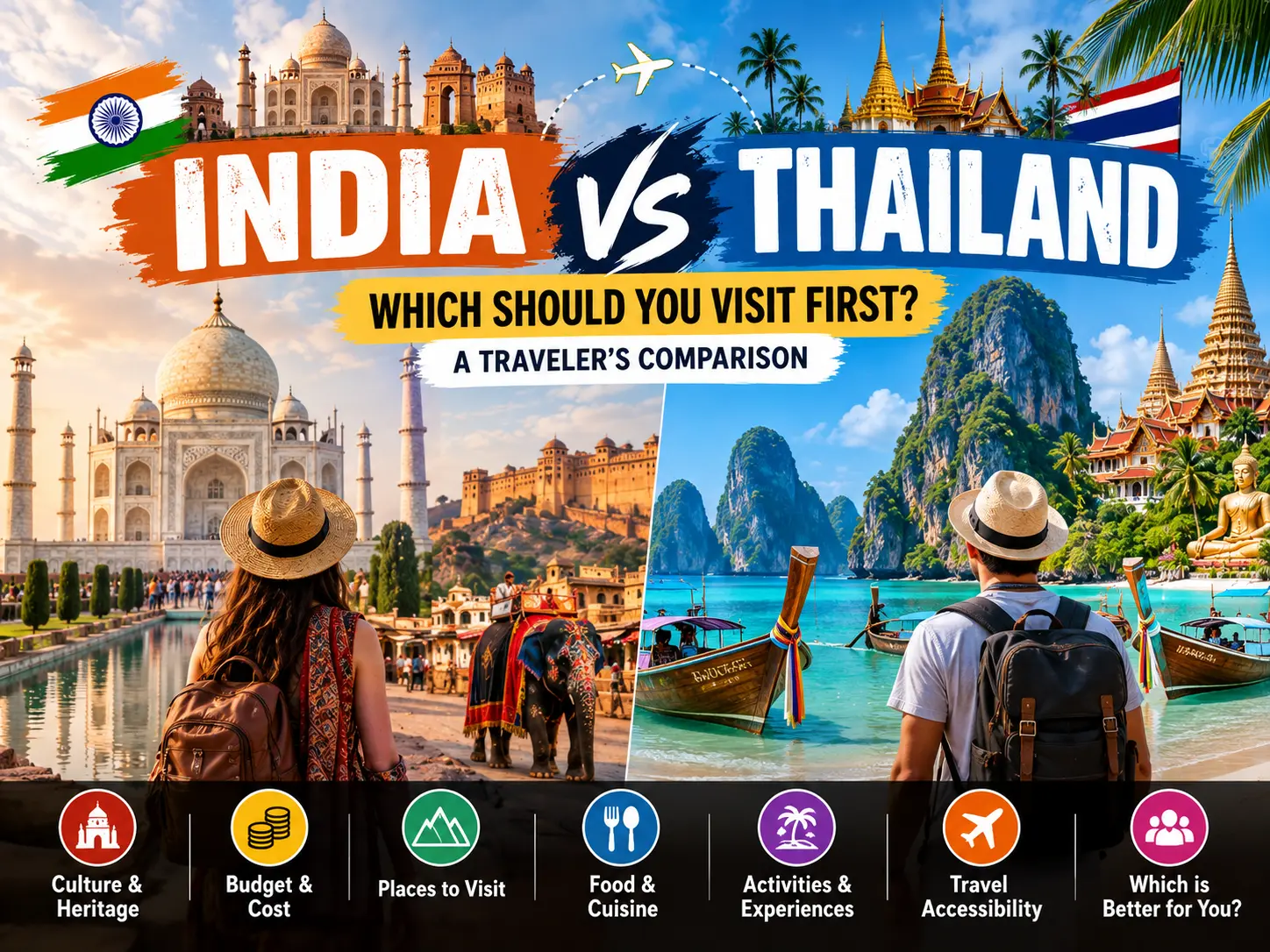
By Mukesh Sain | Founder, My Dream India Tour | Jaipur, Rajasthan Last Updated: 2026 | Reading Time: 13 minutes
Of all the questions I answer as a Jaipur-based tour guide, this one arrives in my inbox more than almost any other — and it always comes from guests who are genuinely trying to make the right decision for their first India trip:
"Mukesh — should I do the Golden Triangle or Rajasthan? Which gives me more? Which is right for me?"
I understand the confusion completely. Both tours are marketed enthusiastically. Both cover extraordinary ground. And for a first-time international visitor trying to plan from New York, London, or Berlin — they can sound deceptively similar.
They are not similar. They are complementary — and understanding the difference between them is the most important decision you will make about your India itinerary.
This guide gives you everything you need to make that decision with confidence.
Choose the Golden Triangle (Delhi–Agra–Jaipur, 5–7 days) if this is your first India trip or you have limited time. It delivers India's most iconic monuments — the Taj Mahal, Amber Fort, Red Fort — in the most efficient, accessible circuit available.
Choose a full Rajasthan Tour (10–14 days) if you want desert forts, lake palaces, camel safaris, and a deeper cultural experience — or if you have already done the Golden Triangle and want to go further into royal India.
Or do both (12–15 days) — because Jaipur is where the two tours overlap, and combining them in a single journey is the most rewarding India itinerary of all.
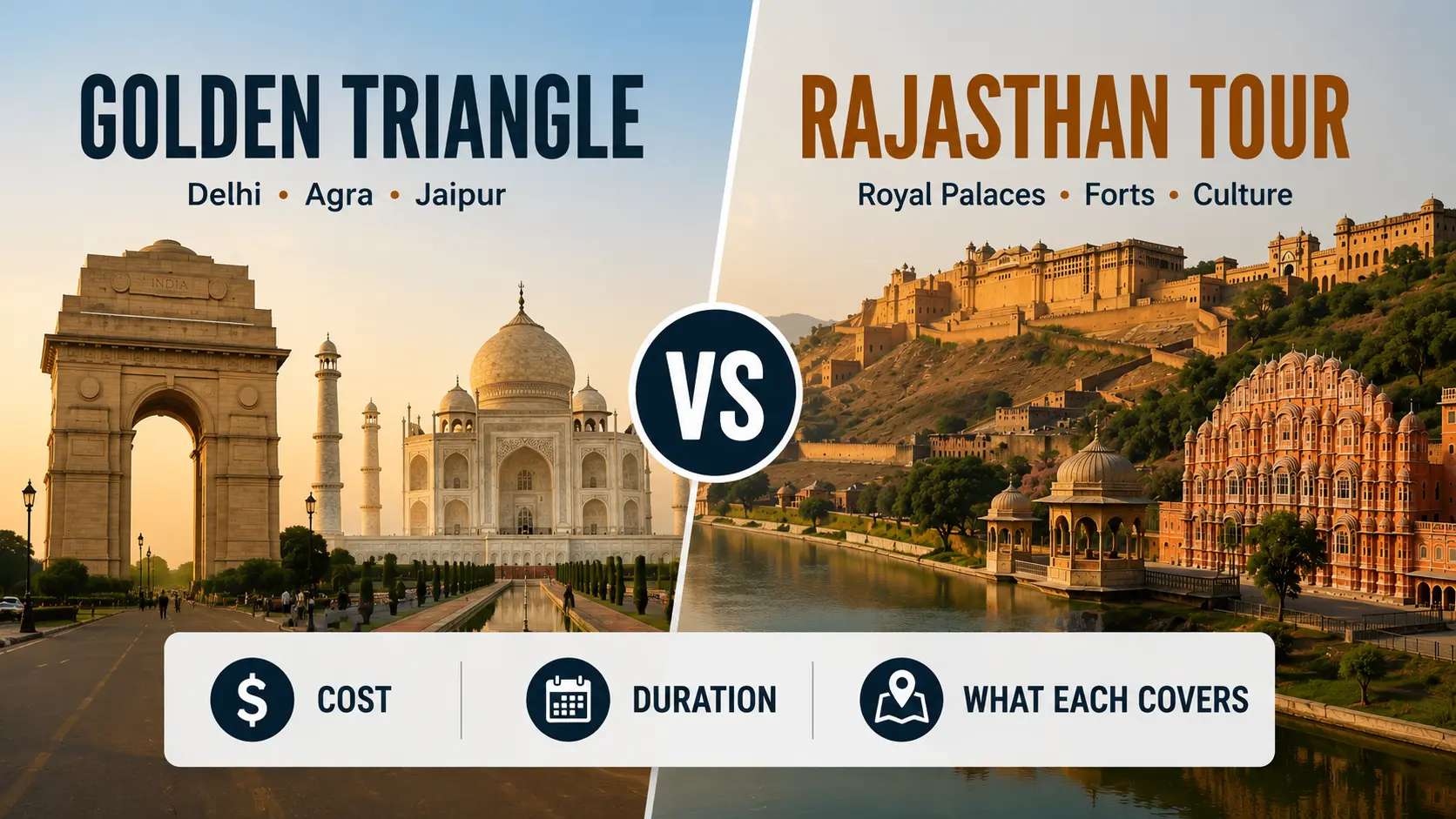
Golden Triangle vs Rajasthan Tour: Quick Comparison Table
|
Factor
|
Golden Triangle
|
Rajasthan Tour
|
|
Duration
|
5–7 days
|
10–14 days
|
|
Cities Covered
|
Delhi, Agra, Jaipur
|
Jaipur + Jodhpur, Jaisalmer, Udaipur, Pushkar
|
|
Major Sites
|
6–8
|
15–20+
|
|
Cost (per person, mid-range 3-star)
|
$800–$1,500
|
$1,800–$3,000
|
|
Cost (per person, luxury 5-star)
|
$2,500–$5,000
|
$4,500–$8,000+
|
|
Best For
|
First-time visitors, limited time
|
Deeper exploration, repeat visitors
|
|
Pace
|
Moderate — 1-2 nights per city
|
Relaxed — 2-3 nights per city
|
|
Highlights
|
Taj Mahal, Mughal history, Amber Fort
|
Desert forts, lake palaces, Thar Desert
|
|
Wildlife
|
Ranthambore add-on (3 hrs from Jaipur)
|
Ranthambore included in many itineraries
|
|
Desert Experience
|
Not included
|
Jaisalmer Sand Dunes, desert camping
|
|
Photography
|
(iconic monuments)
|
(colour, landscape, forts)
|
|
Ideal Trip Length Available
|
1 week or less
|
10+ days
|
What Is the Difference Between a Golden Triangle Tour and a Rajasthan Tour?
The fundamental difference is this: the Golden Triangle is a specific, defined circuit connecting three cities. Rajasthan is a region — and a Rajasthan tour is a journey through that region's greatest destinations.
The Golden Triangle — Delhi, Agra, and Jaipur — forms a near-perfect triangle on the map of North India. The three cities sit approximately 200–250 km apart from each other, connected by excellent highways, and each contains some of India's most famous and most visited monuments. The Golden Triangle is India's most efficient sightseeing circuit: maximum iconic experiences in minimum time.
A Rajasthan tour begins where the Golden Triangle ends. Jaipur — the third city of the Golden Triangle — is also the gateway to Rajasthan's deeper desert kingdom. From Jaipur, a Rajasthan tour extends into the Blue City of Jodhpur, the Golden Desert City of Jaisalmer, the City of Lakes at Udaipur, and the holy pilgrimage town of Pushkar. Where the Golden Triangle covers three cities, a full Rajasthan tour covers six to eight.
The Golden Triangle covers major highlights within a short duration. Rajasthan offers deeper cultural immersion but requires more time.
The key point: Jaipur appears in both tours. This is what makes combining them so natural — the Golden Triangle leads directly into Rajasthan, and many of our guests from the USA, UK, and Germany do exactly this in a single 12 to 15-day journey.
What Does a Golden Triangle Tour Include?
Cities and Sites
Delhi (1.5–2 days)
Delhi is India's capital and its most layered city — three thousand years of empires compressed into a modern metropolis of extraordinary energy. The Golden Triangle begins here.
Key sites:
- Red Fort (Lal Qila): UNESCO World Heritage Site, Shah Jahan's monumental sandstone palace-fortress
- Humayun's Tomb: UNESCO World Heritage Site, the Mughal monument that directly inspired the Taj Mahal
- Qutub Minar: UNESCO World Heritage Site, the world's tallest brick minaret (72.5 metres)
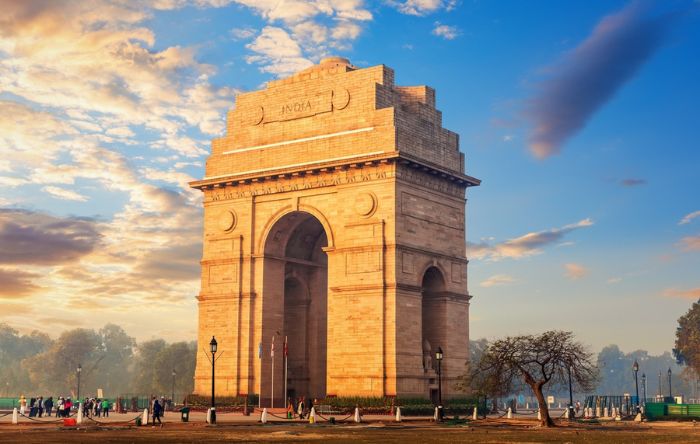
- India Gate: Delhi's most recognisable landmark, a 42-metre war memorial on the ceremonial Rajpath
- Jama Masjid: India's largest mosque, built by Emperor Shah Jahan
- Chandni Chowk: Old Delhi's legendary 17th-century bazaar, one of Asia's greatest street food destinations
- Lodi Garden: a peaceful park of Mughal and Lodi-era tombs surrounded by manicured gardens
Agra (1.5–2 days)
Agra is the emotional heart of the Golden Triangle — and the reason most international visitors come to India in the first place.
Key sites:
- Taj Mahal: UNESCO World Heritage Site. The world's most beautiful building, built by Shah Jahan in memory of his wife Mumtaz Mahal (1631–1653)
- Agra Fort: UNESCO World Heritage Site. The Mughal fortress where Shah Jahan spent his final years imprisoned, gazing at the Taj Mahal from his window
- Mehtab Bagh: the "Moonlight Garden" directly across the Yamuna River from the Taj, offering the iconic symmetrical photograph with perfect river reflections
- Fatehpur Sikri: 40 km from Agra, Akbar's extraordinary abandoned Mughal ghost city, UNESCO World Heritage Site
Jaipur (2 days)
Jaipur — the Pink City, capital of Rajasthan — is where the Golden Triangle ends and Rajasthan begins.
Key sites:
- Amber Fort: UNESCO World Heritage Site (Hill Forts of Rajasthan). The finest Rajput fort in India, famous for its legendary Sheesh Mahal mirror palace
- City Palace: the royal residence of the Jaipur maharajas, partially still inhabited today
- Jantar Mantar: UNESCO World Heritage Site. The largest of five 18th-century astronomical observatories
- Hawa Mahal: Jaipur's iconic 5-storey pink sandstone facade with 953 intricately carved windows
- Jaipur's bazaars: Johari Bazaar (jewellery), Bapu Bazaar (textiles), Tripolia Bazaar (bangles)
- Nahargarh Fort: the finest sunset viewpoint over Jaipur's pink city skyline
Typical Golden Triangle Tour Duration: 5 to 7 days Golden Triangle Tour Pace: 1 to 2 nights per city — moderate, achievable, ideal for first-timers
What Does a Rajasthan Tour Include?
A full Rajasthan tour begins in Jaipur (which it shares with the Golden Triangle) and extends through the full royal desert kingdom — adding cities and experiences that the Golden Triangle cannot provide.
Jaipur (2 days) — As above
Pushkar (1–2 days) India's only Brahma temple and the sacred Pushkar Lake. The famous Pushkar Camel Fair (November) is one of the world's great cultural spectacles — thousands of camels, traders, and pilgrims converging on a holy desert town.
Jodhpur — The Blue City (2 days)
Jodhpur is the surprise of every Rajasthan tour — a city whose sheer visual drama consistently exceeds the expectations of even seasoned travellers.
Key sites:
- Mehrangarh Fort: widely considered India's finest fort interior. Rising 400 feet above the city on a sheer rock outcrop, its carved sandstone chambers are extraordinary
- Blue City walk: thousands of indigo-painted houses tumbling down the hillside below the fort
- Umaid Bhawan Palace: one of India's last great palace constructions, partly a hotel, partly a museum
- Jaswant Thada: a delicate white marble cenotaph in a garden above the city
Jaisalmer — The Golden Desert City (2 days)
Jaisalmer is unlike any other city in India — a living, inhabited medieval fortress rising from the Thar Desert, built entirely from golden sandstone that changes colour from honey at noon to amber at sunset to deep bronze at dusk.
Key sites:
- Jaisalmer Fort: UNESCO World Heritage Site. The world's only living fort — thousands of people still live inside its 12th-century walls
- Sam Sand Dunes: India's most spectacular desert experience: camel safari at sunset, luxury desert camp under the stars
- Patwon ki Haveli: An elaborate cluster of five ornate merchant mansions with extraordinary carved sandstone facades
- Desert camping: Overnight luxury tented camp with traditional Rajasthani folk music, dinner under the Milky Way
Udaipur — The City of Lakes (2 days)
Often called the most romantic city in India, Udaipur is built around a series of shimmering freshwater lakes with white marble palaces seeming to float on the water.
Key sites:
- City Palace: The largest palace complex in Rajasthan, built over 400 years by successive maharanas
- Lake Pichola boat ride: Sunset on the lake with the City Palace and Jag Mandir illuminated above
- Jag Mandir: A 17th-century island palace in Lake Pichola, once shelter to the young Mughal prince Shah Jahan
- Saheliyon ki Bari: A royal garden with ornate fountains, lotus pools, and marble pavilions
Typical Full Rajasthan Tour Duration: 10 to 14 days
Rajasthan Tour Pace: 2 nights minimum per city — relaxed and deeply immersive
Duration Comparison — How Many Days Does Each Tour Take?
|
Tour
|
Minimum
|
Comfortable
|
Ideal
|
|
Golden Triangle only
|
5 days
|
6–7 days
|
7–8 days
|
|
Rajasthan only (from Jaipur)
|
7 days
|
10 days
|
12–14 days
|
|
Golden Triangle + Rajasthan
|
10 days
|
14 days
|
15–17 days
|
Day breakdown for Golden Triangle:
|
City
|
Minimum
|
Comfortable
|
Ideal
|
|
Delhi
|
1 day
|
2 days
|
2–3 days
|
|
Agra
|
1 day
|
1.5 days
|
2 days
|
|
Jaipur
|
1 day
|
2 days
|
2–3 days
|
|
Total
|
3–4 days
|
5–6 days
|
6–7 days
|
Day breakdown for Full Rajasthan (starting Jaipur):
|
City
|
Duration
|
|
Jaipur
|
2 days
|
|
Pushkar
|
1 day (optional)
|
|
Jodhpur
|
2 days
|
|
Jaisalmer
|
2 days
|
|
Udaipur
|
2 days
|
|
Total
|
9–10 days
|
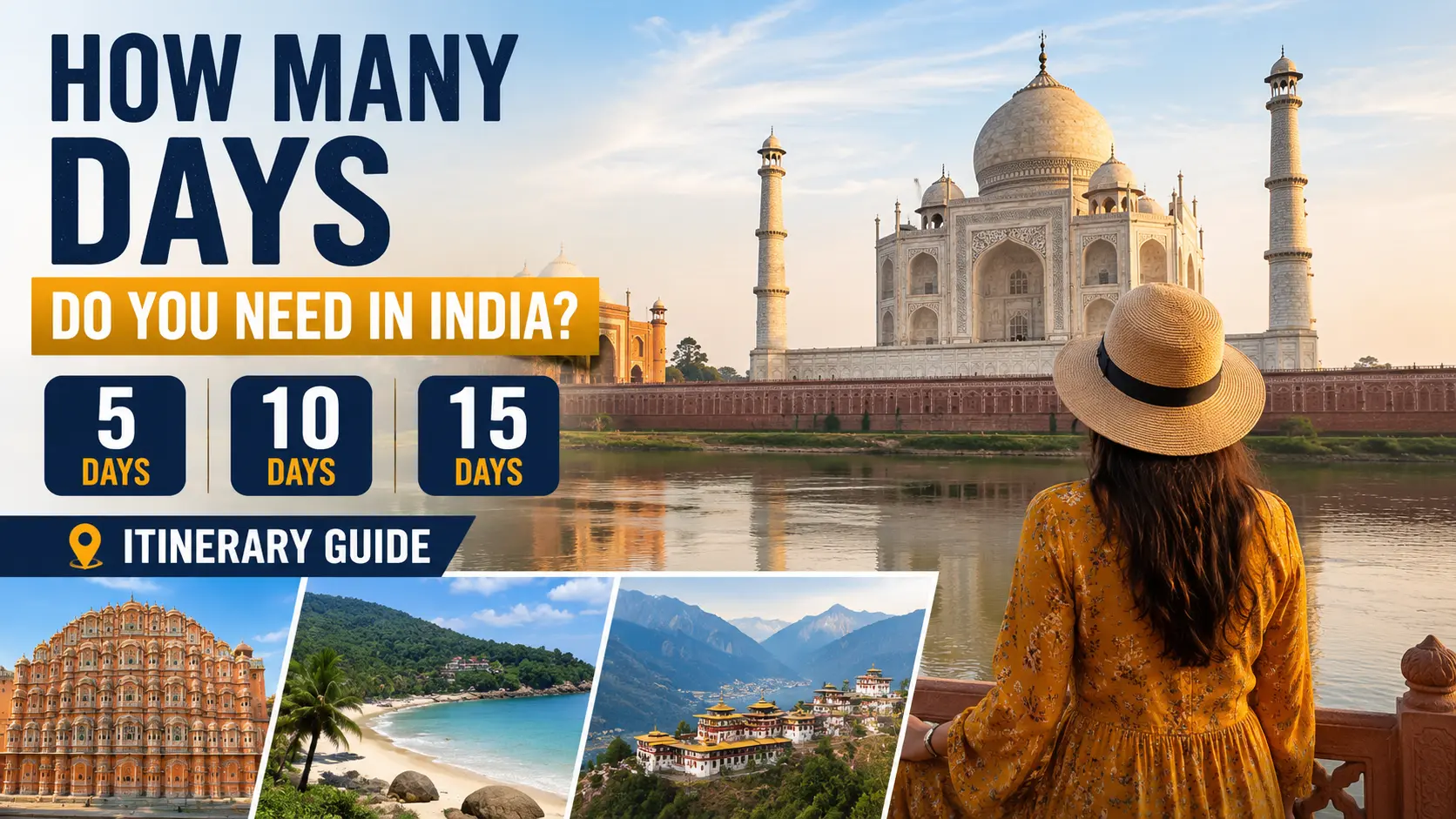
Five to seven days are usually sufficient for the Golden Triangle. Ten to fourteen days allow comfortable Rajasthan exploration.
Cost Comparison — Golden Triangle vs Rajasthan Tour Price
This is the most practical comparison — and the one where honest, specific numbers are most useful to international guests from the USA, UK, Canada, France, and Germany.
Golden Triangle Tour Cost 2026
Most international travelers spend between $500 and $900 per person for a comfortable private Golden Triangle Tour. Final costs depend on itinerary length, transportation and accommodation preferences.
Here is the complete cost breakdown for a private Golden Triangle tour for 2 people:
Budget (3-star hotels, private vehicle):
- Hotels (5-6 nights): $40–$70 per room per night
- Private AC vehicle + driver: $60–$80 per day
- Licensed guides at monuments: $30–$50 per city
- Monument entry fees (foreign rates): $80–$120 total
- Meals (2-3 restaurants per day): $15–$30 per day
- Total per person (5-7 days): $500–$900
Mid-range (4-star hotels, private vehicle):
- Hotels: $80–$150 per room per night
- Private AC vehicle + driver: $70–$90 per day
- Licensed guides: $40–$60 per city
- Monument fees + extras: $100–$150 total
- Meals (good restaurants): $25–$50 per day
- Total per person (5-7 days): $900–$1,500
Luxury (5-star/heritage hotels, premium vehicle):
- Hotels (Oberoi Amarvilas Agra, Rambagh Palace Jaipur): $300–$800+ per room per night
- Premium private vehicle: $90–$130 per day
- Expert guides + private monument access: $80–$120 per city
- Total per person (5-7 days): $2,500–$5,000+
Accommodation across the Golden Triangle runs the full spectrum from budget guesthouses to five-star heritage hotels. Mid-range (3-4 star) is the sweet spot for most leisure travellers — comfortable, reliable, and reasonably priced.
Rajasthan Tour Cost 2026
A full Rajasthan circuit covering Jaipur, Jodhpur, Jaisalmer, and Udaipur is longer — and therefore more expensive — than the Golden Triangle. But the per-day cost is similar; the overall cost is higher simply because of the additional days.
Budget (3-star hotels, private vehicle):
- Hotels (9-12 nights): $35–$65 per room per night
- Private AC vehicle + driver: $65–$85 per day (longer drives — Jodhpur to Jaisalmer is 5 hours)
- Licensed guides: $30–$50 per city
- Desert camp (Jaisalmer): $60–$100 per person per night
- Monument fees: $100–$150 total
- Total per person (10-14 days): $1,200–$2,000
Mid-range (4-star hotels, private vehicle):
- Hotels: $80–$150 per room per night
- Premium private AC vehicle: $75–$95 per day
- Licensed guides at each city: $40–$60 per city
- Desert camp (mid-range): $100–$200 per person
- Meals and incidentals: $35–$60 per day
- Total per person (10-14 days): $2,000–$3,500
Luxury (palace hotels + premium experiences): Luxury tours in Rajasthan cost between USD 3,000 and 6,000 per person depending on the length and inclusions. An 8-day trip starts around USD 3,000 while extended 16-day journeys reach USD 6,000.
- Total per person (12-16 days): $4,000–$8,000+
Side-by-Side Cost Summary
|
Category
|
Golden Triangle (7 days)
|
Rajasthan (12 days)
|
|
Budget (per person)
|
$500–$900
|
$1,200–$2,000
|
|
Mid-range (per person)
|
$900–$1,500
|
$2,000–$3,500
|
|
Luxury (per person)
|
$2,500–$5,000
|
$4,000–$8,000+
|
Important: These are per-person costs based on 2 travellers sharing a room. Solo travellers pay a single supplement (typically $15–$50 extra per night). Group discounts apply for 4+ travellers. My Dream India Tour provides all-inclusive transparent quotes with zero hidden charges — contact us for a precise quote for your specific dates and preferences.
Which Is Better for First-Time Visitors to India?
For most first-time international visitors — the Golden Triangle is the right starting point.
Here is my honest reasoning:
The Golden Triangle delivers India's greatest hits in India's most accessible format. The Taj Mahal. The Red Fort. Amber Fort. Three UNESCO World Heritage cities. Indian street food at its most extraordinary. All within a 720-km circuit served by excellent roads, reliable hotels, and the country's most developed tourism infrastructure.
For a first-time visitor from New York, London, Paris, or Berlin — still adjusting to India's scale, its pace, its sensory intensity — the Golden Triangle provides extraordinary depth without the additional complexity of longer desert drives and more remote locations.
The Golden Triangle is also more forgiving of shorter trip lengths. If you only have 7 to 10 days in India, the Golden Triangle uses that time well. A full Rajasthan circuit needs 12 to 14 days to do properly — and a rushed Rajasthan tour is a more significant disappointment than a comfortable Golden Triangle.
However — if you have 12 to 15 days and genuine adventurousness — go deeper. The Golden Triangle is magnificent. But Rajasthan's full desert circuit — standing on Mehrangarh Fort's ramparts above Jodhpur's blue rooftops, watching the Milky Way appear over Jaisalmer's sand dunes, drifting across Udaipur's Lake Pichola at sunset — delivers an India experience that goes significantly beyond what the Golden Triangle alone can offer.
The Golden Triangle remains India's most famous route for first-time travellers. Each tour provides a unique flavour of India — and the guide helps you understand which route suits your travel style, time availability, and personal interests.
My specific recommendation for first-timers by trip length:
|
Time Available
|
My Recommendation
|
|
5–7 days
|
Golden Triangle only — and do it properly
|
|
8–10 days
|
Golden Triangle + one Rajasthan extension (Jodhpur OR Udaipur)
|
|
12–15 days
|
Full Golden Triangle + full Rajasthan circuit
|
|
15+ days
|
Golden Triangle + Rajasthan + Varanasi OR wildlife safari
|
Which Is Better for Repeat Visitors to India?
If you have already done the Golden Triangle — and are planning your return India trip — the answer is clear:
Go deeper into Rajasthan. It will not disappoint.
Every guest who has done the Golden Triangle on a first visit and returned for Rajasthan tells me the same thing: "Why did I wait so long?" Rajasthan has a scale, a colour, a desert drama, and a lived-in royal heritage that is entirely distinct from the Mughal grandeur of the Golden Triangle — and entirely extraordinary in its own right.
For repeat visitors specifically, I recommend:
Rajasthan Desert Circuit (first return trip): Jaipur → Jodhpur → Jaisalmer → Bikaner → Shekhawati → Jaipur — the complete desert kingdom.
Rajasthan + Wildlife (second return trip): Golden Triangle + Ranthambore tiger safari + Udaipur. The combination of Taj Mahal, tigers, and lake palaces in a single itinerary is genuinely extraordinary.
North India Deep Dive (third visit): Varanasi + Rishikesh + Amritsar Golden Temple — the spiritual and cultural North India that neither the Golden Triangle nor Rajasthan covers.
South India (whenever): Kerala backwaters + Tamil Nadu temples — a completely different India that pair beautifully with any number of North India visits.
Can You Combine Both in One Trip?
Absolutely — and this is precisely what My Dream India Tour specialises in designing.
The combination of Golden Triangle + Rajasthan is the single most rewarding first India itinerary available — because Jaipur, where the Golden Triangle ends, is also where Rajasthan begins. There is no backtracking, no duplicated cities, no wasted travel time.
Sample Combined Itinerary — 14 Days:
Golden Triangle Phase (Days 1–7):
Day 1–2: Delhi — Red Fort, Humayun's Tomb, Qutub Minar, Old Delhi street food tour
Day 3: Drive Delhi to Agra (3.5 hrs) — Taj Mahal afternoon, Mehtab Bagh sunset
Day 4: Taj Mahal sunrise, Agra Fort, Fatehpur Sikri (40 km detour) — drive to Ranthambore (3 hrs)
Day 5: Ranthambore — morning tiger safari + evening safari Day 6: Early morning safari — transfer to Jaipur (3 hrs)
Day 7: Jaipur — Amber Fort, City Palace, Jantar Mantar, Hawa Mahal, Nahargarh Fort sunset
Rajasthan Extension Phase (Days 8–14):
Day 8: Drive Jaipur to Jodhpur (4.5 hrs via Ajmer–Pushkar optional stop) — evening Mehrangarh Fort view
Day 9: Jodhpur — Mehrangarh Fort full morning, Blue City walk, Umaid Bhawan Palace, clock tower market
Day 10: Drive Jodhpur to Jaisalmer (4.5 hrs) — Jaisalmer Fort afternoon, Patwon ki Haveli
Day 11: Jaisalmer — desert walk, Sam Sand Dunes camel safari sunset, luxury desert camp overnight
Day 12: Desert camp sunrise — drive to Udaipur (6 hrs via Pali — long but beautiful drive)
Day 13: Udaipur — City Palace full morning, Lake Pichola boat ride, Jagdish Temple, Saheliyon ki Bari
Day 14: Udaipur morning leisure — fly from Udaipur to Delhi for international connection (1.5 hrs flight)
What this 14-day combination delivers:
- Complete Golden Triangle (Delhi, Agra, Jaipur)
- Taj Mahal at both sunrise and sunset
- Bengal tiger safari at Ranthambore
- Four Rajasthan cities: Jodhpur, Jaisalmer, Udaipur
- Desert camping under the Milky Way
- UNESCO monuments, living forts, lake palaces, tiger reserves, and the Thar Desert — all in a single trip
This is the itinerary I most often recommend to guests from the USA and UK who are visiting India for the first time and can take 14 to 15 days.
Golden Triangle vs Rajasthan: Which Fits Your Travel Style?
For Photography
Rajasthan wins — comprehensively.
The Golden Triangle delivers iconic, world-famous photographs: the Taj Mahal at sunrise, Amber Fort reflected in Maota Lake, Delhi's Red Fort gates. These are extraordinary images.
But Rajasthan delivers colour, scale, and drama that the Golden Triangle simply cannot match. The cobalt blue of Jodhpur's streets seen from Mehrangarh's ramparts. The camel caravan silhouettes on Sam's golden dunes at sunset. Udaipur's white palaces are reflected in Lake Pichola in the evening light. Jaisalmer's golden fort against the desert sky.
For serious photographers — and for the guests I guide who have photography as a primary objective — Rajasthan is one of the world's great photography destinations, and it surpasses the Golden Triangle on virtually every visual dimension.
For Wildlife
Both offer wildlife — Rajasthan offers more.
The Golden Triangle's wildlife offering is Ranthambore National Park — 3 hours from Jaipur — which can be added to any Golden Triangle itinerary for one of India's finest tiger safari experiences.
A full Rajasthan itinerary can incorporate Ranthambore within the flow of the circuit — making it a natural stop between Agra and Jaipur rather than a separate detour. Rajasthan also offers leopard sightings at the Jawai Leopard Safari near Pali (between Jodhpur and Udaipur), and the Tal Chhapar Blackbuck Sanctuary near Bikaner.
The Ranthambore-Jaipur-Rajasthan combination is the finest wildlife + heritage itinerary in India — and only a Rajasthan tour makes this flow naturally.
For Culture and Heritage
Honesty: they excel in different cultural dimensions.
The Golden Triangle is Mughal culture — imperial, architectural, cosmopolitan, and global in its historical reach. The Taj Mahal, Red Fort, and Humayun's Tomb are monuments that shaped world history. The street culture of Old Delhi is the most immersive urban bazaar experience in India.
Rajasthan is Rajput culture — royal, feudal, warrior-clan, and desert-rooted. It is more intimate than the Mughal grandeur of the Golden Triangle — more personal, more colourful, more connected to living tradition. The folk music performed at a Jaisalmer desert camp, the craft workshops in Jodhpur's lanes, the textile block-printing studios of Sanganer near Jaipur — these are cultural experiences with a specificity and authenticity that Agra's tourist bazaars cannot match.
A combined Golden Triangle + Rajasthan tour gives you both cultural traditions — Mughal grandeur and Rajput royalty — in a single coherent journey.
For Relaxation
Rajasthan — by a significant margin.
The Golden Triangle's pace is moderate but purposeful. You are moving between cities, covering ground, seeing monuments. It is not a relaxing circuit — it is an extraordinary one.
Rajasthan — particularly Udaipur, which is many guests' favourite India city — offers the lake views, the rooftop restaurant dinners, the heritage hotel courtyards, and the general unhurried atmosphere that genuine relaxation requires. Jaisalmer's desert camp — a night under the stars with nothing on the schedule except a camel ride and a sunset — is one of the most genuinely relaxing experiences India offers.
If rest and beauty are primary motivations — Rajasthan is the right choice.
For Older Travellers or Those With Limited Mobility
Golden Triangle is more accessible — Rajasthan requires specific planning.
The Golden Triangle's infrastructure — hotel lifts, paved monument paths, short distances between cities, frequent medical facilities — makes it significantly more accessible for older travellers or those with mobility considerations.
Rajasthan's forts involve significant staircase climbing (Mehrangarh has multiple steep staircases, Amber Fort's main palace is up a ramp but with uneven surfaces), and the longer desert drives between cities can be tiring. That said — Rajasthan is absolutely accessible for older or mobility-limited travellers with proper planning. Heritage hotels in Udaipur and Jaipur are some of the most comfortable in India. The City Palace in Jaipur and Jaisalmer's fort interiors are accessible without major climbing.
My recommendation: contact My Dream India Tour with specific mobility requirements and we will plan a Rajasthan itinerary around what is accessible and genuinely extraordinary for your situation.
Pros and Cons Summary Table
| |
Golden Triangle
|
Rajasthan Tour
|
|
Photography
|
World-famous shots
|
Unmatched colour & drama
|
|
Culture
|
Mughal heritage depth
|
Rajput living tradition
|
|
Wildlife
|
(Ranthambore add-on)
|
(Ranthambore + leopards)
|
|
Relaxation
|
Moderate pace
|
Desert, lakes, slow pace
|
|
Accessibility
|
Best infrastructure
|
Requires planning
|
|
Value for time
|
Maximum in minimum
|
Needs 10+ days
|
|
Desert experience
|
Not included
|
Thar Desert + camping
|
|
First-timer friendly
|
⭐⭐⭐⭐⭐
|
⭐⭐⭐⭐ (with good operator)
|
|
Cost
|
Lower ($500–$1,500/person)
|
Higher ($1,200–$3,500/person)
|
In Summary — Which India Tour Should You Choose?
First-time visitor, 7–10 days: Golden Triangle. Do it properly — 2 nights in Delhi, 2 nights in Agra, 2 nights in Jaipur. Add Ranthambore if you have 3 extra days.
First-time visitor, 12–15 days: Golden Triangle + Rajasthan combined. This is the trip that most of my guests describe as the best of their lives.
Repeat visitor, any duration: Rajasthan. Full desert circuit — Jodhpur, Jaisalmer, Bikaner, Udaipur. It is completely different from the Golden Triangle and equally extraordinary.
For photography: Rajasthan always.
For wildlife: Rajasthan (with Ranthambore built in to the natural circuit flow).
For relaxation: Rajasthan — Udaipur especially.
For accessibility: Golden Triangle.
For pure iconic India moments: Golden Triangle.
And whichever you choose — My Dream India Tour will make it extraordinary.
Feel free to reach out with any questions. I read and respond to every message personally. Email us at mydreamindiatour@gmail.com or WhatsApp directly at +91-87695-95984. We are always happy to help you choose and plan your perfect India journey.
Plan Your India Tour with My Dream India Tour
Golden Triangle Tours, Rajasthan Tours, Wildlife Safari Tours, North India Tours, South India Tours, Same Day Tours
WhatsApp / Call: +91-87695-95984 | +91-70625-12828
Email: mydreamindiatour@gmail.com
Website: www.mydreamindiatour.com
Based in: Jaipur, Rajasthan, India
Rated #186 of 1,161 Tours & Activities in Jaipur — TripAdvisor
© 2026 My Dream India Tour Author: Mukesh Sain, Founder & Senior Tour Guide, Jaipur
Frequently Asked Questions
Q: What is the difference between a Golden Triangle tour and a Rajasthan tour?
The Golden Triangle is a specific three-city circuit — Delhi, Agra, Jaipur — connected by excellent highways. A Rajasthan tour begins at Jaipur (where the Golden Triangle ends) and extends into the desert kingdom: Jodhpur, Jaisalmer, Bikaner, Udaipur, and Pushkar. The Golden Triangle takes 5-7 days; a full Rajasthan tour needs 10-14 days. The Golden Triangle is Mughal India — the Taj Mahal, Red Fort, imperial monuments. Rajasthan is Rajput India — desert forts, lake palaces, camel safaris, and living tribal culture.
Q: Which is better for first-time visitors to India?
The Golden Triangle is the recommended starting point for most first-time international visitors. The Golden Triangle covers major highlights within a short duration and delivers India's most iconic monuments in its most accessible format. However, if you have 12+ days and genuine curiosity, combining Golden Triangle with at least Jodhpur and Udaipur gives you a significantly richer first India experience.
Q: How many days does a Golden Triangle tour take vs a Rajasthan tour?
Five to seven days are usually sufficient for the Golden Triangle. Ten to fourteen days allow comfortable Rajasthan exploration. A combined Golden Triangle + Rajasthan itinerary needs 12 to 15 days for a comfortable pace — which is the duration I recommend most often to guests from the USA, UK, Canada, France, and Germany.
Q: Which tour costs more — Golden Triangle or Rajasthan?
Rajasthan tours cost more overall — primarily because they involve more days, more cities, and longer drives. However, the per-day cost is similar: approximately $125–$250 per person per day for a mid-range private tour. A 7-day Golden Triangle trip runs approximately $900–$1,500 per person mid-range. A 12-day Rajasthan circuit runs approximately $2,000–$3,500 per person mid-range. Both represent extraordinary value compared to equivalent quality travel in Europe or the Americas.
Q: Is the Golden Triangle enough for a first India trip?
Yes — the Golden Triangle is a complete and deeply satisfying first India trip. The Taj Mahal, Amber Fort, Red Fort, and the extraordinary street culture of Old Delhi are among the greatest travel experiences on earth. You will not leave feeling shortchanged. But you will leave already planning to come back for Rajasthan — which is precisely as it should be.
Q: Should I do Rajasthan after the Golden Triangle?
Absolutely — and there is no better India second trip than Rajasthan. Guests who have done the Golden Triangle and return for Rajasthan consistently describe it as even more extraordinary than they expected. Mehrangarh Fort in Jodhpur, the Jaisalmer desert at night, and Udaipur's City Palace above the lake — these are travel memories that last a lifetime.
Q: Which tour has more wildlife and desert experiences?
Rajasthan — on both counts. The Golden Triangle's wildlife option is Ranthambore (an excellent add-on, 3 hours from Jaipur). Rajasthan incorporates Ranthambore more naturally within the circuit, and adds the Jawai Leopard Safari and Tal Chhapar Blackbuck Sanctuary. For desert, there is no contest: Jaisalmer's Sam Sand Dunes, luxury desert camping, and Thar Desert drives are exclusively part of a Rajasthan tour — the Golden Triangle has no desert component.
Q: Which is better for photography?
Rajasthan — for breadth, colour, and drama. The Golden Triangle offers iconic, world-famous shots (Taj Mahal at sunrise is genuinely unmatched). But for the variety and visual richness that sustains a photography-focused trip — the blue alleys of Jodhpur, Sam Dunes at golden hour, Udaipur's reflections, Amber Fort in morning mist — Rajasthan is India's greatest photography destination.
Q: Can I combine both in one trip?
Yes — and this is the itinerary I recommend most often to first-time visitors with 12 to 15 days. Jaipur connects the two tours seamlessly: it is the final city of the Golden Triangle and the starting point of the Rajasthan circuit. A 14-day combined itinerary delivers Delhi, Agra (Taj Mahal sunrise and sunset), Ranthambore tiger safari, Jaipur, Jodhpur, Jaisalmer (desert camping), and Udaipur — in a single coherent journey without backtracking.
Q: Which is more suitable for older travellers?
The Golden Triangle's infrastructure is more universally accessible — better hotel lifts, shorter drives, more accessible monument paths. Rajasthan is absolutely manageable for older travellers with proper planning, but some forts involve significant staircases and the longer inter-city drives (4.5-5.5 hours) can be tiring. My Dream India Tour designs specific itineraries for older travellers and those with mobility considerations — contact us with your requirements and we will find the right combination.


.jpg)
















.jpg)
.jpg)
.jpg)




.webp)