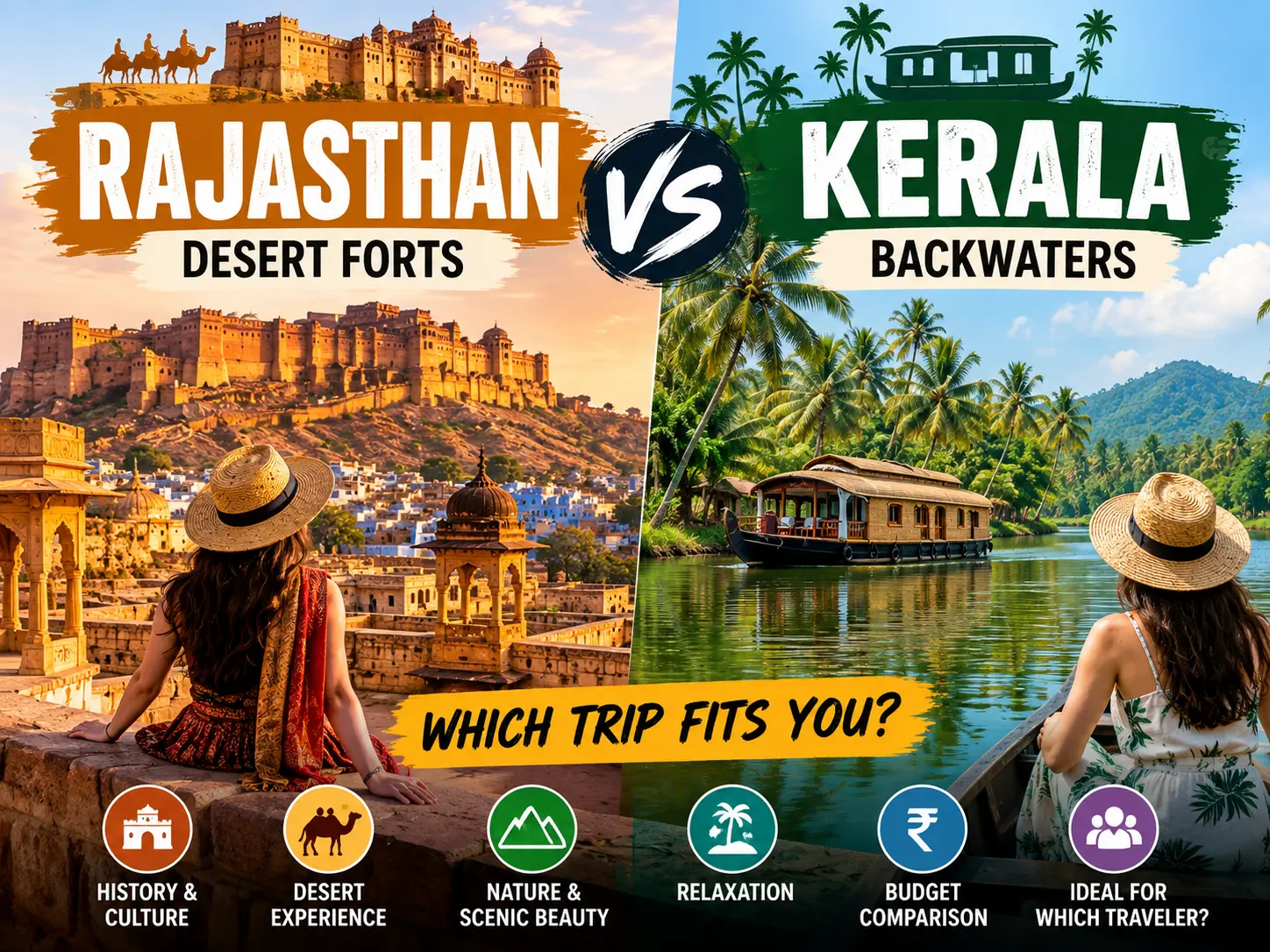
Desert forts or backwaters — which one is really your trip? An honest comparison of Rajasthan and Kerala covering pace, climate, cost, and experiences, from a Jaipur-based tour guide who has sent guests to both.
Rajasthan Tours
By Mukesh Sain | Founder & Senior Tour Guide, My Dream India Tour Based in: Jaipur, Rajasthan, India Last Updated: 2026 | Reading Time: 12 minutes
Almost every week, someone writing to me on WhatsApp from New York, Manchester, Toronto, or Berlin asks a version of the same question: "Mukesh, should we do Rajasthan or Kerala?"
And almost every time, I give them the same honest first answer: it depends on what kind of holiday you're actually picturing when you close your eyes — not what a "Top 10 India Destinations" listicle tells you to picture.
I run tours across Rajasthan and North India myself, and over the years I've built close working relationships with trusted operators in Kerala, so I've sent guests down south more times than I can count and heard back from almost all of them. I've stood on the ramparts of Jaisalmer Fort watching the desert turn gold at sunset, and I've heard from guests who sat on a houseboat in Alleppey watching the backwaters turn silver at the same hour, a few thousand kilometres away. They are both extraordinary. They are also almost nothing alike.
This guide is my honest attempt to help you decide — not by telling you both are wonderful (that's obvious), but by giving you a real framework for which one actually fits the trip you want.
|
Your Situation |
My Recommendation |
|
First-time India visitor, want the "classic" India image |
Rajasthan |
|
Want to slow down and de-stress completely |
Kerala |
|
Traveling with young kids |
Kerala — easier pace, fewer long drives |
|
Traveling with teens or history-curious kids |
Rajasthan — forts genuinely excite them |
|
Honeymoon, want royal romance |
Rajasthan |
|
Honeymoon, want quiet and tropical |
Kerala |
|
Love photography and architecture |
Rajasthan |
|
Love nature, greenery, and wildlife on water |
Kerala |
|
Wellness or Ayurveda focused trip |
Kerala |
|
Combining with Delhi and Agra |
Rajasthan (Golden Triangle route) |
|
Have 15+ days and want real contrast |
Both |
|
Sensitive to heat and humidity |
Rajasthan in winter, avoid Kerala's humidity |
|
Want a slower, one-base trip, not city-hopping |
Kerala |
Rajasthan and Kerala are consistently the two most-searched India destinations among international travellers planning their first or second trip, and for good reason — they represent two completely different, equally "iconic" versions of India. Most first-time visitors don't actually know how different these two trips feel on the ground until someone explains it plainly. So let me do that.
Rajasthan, in one sentence: Desert landscapes, hilltop forts, painted cities, camel safaris, and a strong dose of royal history — a trip that moves, with a new city and a new fort every two or three days.
Kerala, in one sentence: Backwaters, coconut groves, tea hills, houseboats, and Ayurvedic calm — a trip that slows down, with fewer moves and longer stays in each place.
Neither is "better." They solve for different things. Let me walk through both honestly.
If this is your first trip to India and you're picturing turbaned camel drivers, sandstone forts, and bazaars full of colour, Rajasthan delivers that within your first day. There is no destination in India that matches Rajasthan's density of instantly recognisable, dramatic sights — Amber Fort, Mehrangarh Fort, the lake palaces of Udaipur, the sand dunes of Jaisalmer.
Rajasthan is, without exaggeration, India's fort capital. Chittorgarh, Kumbhalgarh, Mehrangarh, Amber, Jaisalmer — these are not small monuments, they are entire fortified cities with centuries of Rajput history behind every wall. If you or your travel companions are drawn to history, architecture, or "walking through the past," nothing in South India competes with this at the same scale.
A camel safari into the Thar Desert, camping under a sky with zero light pollution, a bonfire with local folk musicians — this is an experience with no equivalent in Kerala, or almost anywhere else in India. For many guests, this single night in the desert becomes the most talked-about memory of their entire trip.
October to March is ideal — dry, sunny days and cool evenings, perfect for sightseeing and desert camping. April to June turns brutally hot and is best avoided by first-time visitors. Monsoon (July–September) is quieter and greener but with occasional heavy rain.
If your India trip includes the Taj Mahal, Rajasthan slots in seamlessly as part of the Golden Triangle route, letting you cover Delhi, Agra, and Rajasthan's core circuit (Jaipur, Jodhpur, Udaipur, Jaisalmer) in one continuous, efficient loop by road.
If your goal for this holiday is to actually rest — not just change scenery, but rest — Kerala is built for that. Long houseboat afternoons, tea-garden mornings in Munnar, and calm coastal evenings replace the fort-a-day pace that a Rajasthan circuit usually involves.
Cruising through Alleppey's canals and lagoons on a traditional kettuvallam houseboat, watching paddy fields and coconut groves drift past, is an experience genuinely unlike anything else in India — closer to nowhere else in the country, arguably nowhere else in the world.
Kerala's Ayurvedic tradition isn't a spa-day add-on — it's a centuries-old medical system practised seriously across the state. Travellers specifically visit during the monsoon season for traditional Ayurvedic treatments, which are considered especially effective at that time of year.
September to March is the most comfortable window, avoiding the heaviest southwest monsoon rains (June–August). Winter (December–February) offers the most pleasant combination of dry weather and lush, post-monsoon greenery.
If your trip is focused on South India, Kerala connects easily with Goa's beaches or Tamil Nadu's temple towns, letting you build a coastal-and-culture South India itinerary without the long internal flights that a North-South combination requires.
|
Factor |
Rajasthan |
Kerala |
|
Landscape |
Desert, hills, forts, palaces |
Backwaters, tea hills, coastline |
|
Pace of travel |
Moderate-to-active, city-hopping |
Slow, fewer moves |
|
Signature experience |
Camel safari in the Thar Desert |
Houseboat cruise in Alleppey |
|
Best season |
October–March |
September–March |
|
Climate feel |
Dry, cool winters, hot summers |
Humid, tropical year-round |
|
Ideal trip length |
8–10 days for the core circuit |
6–8 days for the core circuit |
|
Cuisine |
Rich, spiced vegetarian thalis |
Coconut-based curries, seafood |
|
Honeymoon style |
Royal, palace-hotel romance |
Quiet, tropical, houseboat romance |
|
Wildlife option |
Ranthambore tiger safari |
Periyar forest and birdlife |
|
Combines naturally with |
Delhi, Agra (Golden Triangle) |
Goa, Tamil Nadu |
|
Photography style |
Golden desert light, architecture |
Green water reflections, tea gardens |
|
Best for |
History lovers, first-timers, families with older kids |
Wellness travellers, couples, nature lovers |
1. Do you want to move, or do you want to stay still? A Rajasthan circuit means a new city roughly every two to three days, with forts, markets, and drives in between. A Kerala trip rewards staying in one or two places longer — Alleppey for a couple of nights, Munnar for a couple more — and simply being there.
2. What's the photo you're actually picturing? Golden sandstone against a desert sunset, camels silhouetted on dunes → Rajasthan. A houseboat gliding through still green water at sunrise → Kerala. Trust that instinct; it usually reflects the trip you'll enjoy more.
3. How much heat and humidity can you handle? Rajasthan in winter is dry and very manageable, even for guests who don't love heat. Kerala is tropical and humid essentially year-round, cooling only modestly in winter. If humidity genuinely bothers you, that alone can be the deciding factor.
4. How many days do you actually have? With 5–7 days, I always recommend picking one region and doing it properly rather than rushing both. With 12 days or more, seeing both becomes genuinely realistic — and for many first-time visitors, that contrast becomes the highlight of the entire trip.
Yes — and this is one of the itineraries I get asked to build most often. A typical combined route looks like this: begin in Delhi and Agra, move through Rajasthan's Golden Triangle extension (Jaipur, Jodhpur, Udaipur, and optionally Jaisalmer), then fly south to Kochi to begin the Kerala leg (Munnar, Alleppey, and a coastal stop). A domestic flight connects North and South India in roughly 2.5 to 3 hours, so the logistics are far simpler than most guests expect.
This combined route typically needs 16 to 20 days to do both regions justice without feeling rushed. If your schedule allows it, I genuinely think this is the single best way to experience India on a first visit — because the contrast between the two regions is, in a real sense, the story of India itself.
If you made me choose without knowing anything else about you, here's my honest, unfiltered answer: for a first trip to India with 7 to 10 days, I lean Rajasthan, because it gives you the sights, history, and "wow" moments that most people are actually flying to India for. For a second trip, a honeymoon focused on quiet romance, or anyone who already knows they want to properly rest, I lean Kerala.
But the real answer, almost every time a guest actually sits down and tells me what they're picturing, turns out to be "both" — just spread across a longer trip than they originally planned.
Having guided travellers through Rajasthan for over a decade and worked closely with trusted partners across Kerala, my honest advice is simple: there's no wrong choice here, only the choice that matches the trip you're actually dreaming of. If you want to feel like you've stepped into a Rajput legend, come to Rajasthan. If you want to breathe out and let the world slow down around you, go to Kerala. And if your schedule allows it, don't choose — see both, and let India show you just how many different countries it can feel like within one border.
Tell me what kind of trip you're picturing, and I'll help you build the itinerary — desert forts, quiet backwaters, or both.
— Mukesh Sain, Founder, My Dream India Tour
WhatsApp / Call: +91-87695-95984 | +91-70625-12828
Email: mydreamindiatour@gmail.com
Website: www.mydreamindiatour.com
Based in: Jaipur, Rajasthan, India
Rajasthan Tours | Golden Triangle Tours | South India Tours | Wildlife Safari Tours | North India Tours
Rated #186 of 1,161 Tours & Activities in Jaipur — TripAdvisor
© 2026 My Dream India Tour. Author: Mukesh Sain, Founder & Senior Tour Guide, Jaipur
Q: Is Rajasthan or Kerala better for a first trip to India? For most first-time visitors, Rajasthan is the stronger starting point — it delivers the classic, instantly recognisable image of India (forts, palaces, deserts, colour) within a compact, well-connected circuit. Kerala works beautifully as an add-on to that first trip, or as a calmer standalone trip for travellers who already know they prefer nature over monuments.
Q: Which is more expensive, Rajasthan or Kerala? Both can be tailored to almost any budget level. Rajasthan tends to offer more heritage hotel options across a wide price range, while Kerala's houseboats and wellness resorts span simple to very luxurious. For a comparable comfort level, overall costs typically come out close to each other.
Q: How many days do I need for Rajasthan and how many for Kerala? A proper Rajasthan circuit (Jaipur, Jodhpur, Udaipur, Jaisalmer) needs 8 to 10 days. A good Kerala trip (Kochi, Munnar, Alleppey, and a beach stop) needs 6 to 8 days. If combining both with Delhi and Agra, plan for 16 to 20 days total.
Q: Is Kerala or Rajasthan safer for solo female travellers? Both states have a strong, well-established reputation for tourist safety, particularly when travelling with a registered operator, private vehicle, and organised itinerary — which is how every My Dream India Tour trip is run, regardless of which region you choose.
Q: Which is better for a honeymoon, Rajasthan or Kerala? Both are consistently ranked among India's top honeymoon destinations, just in very different styles. Rajasthan offers royal romance through heritage palace hotels and desert camps; Kerala offers quiet, tropical intimacy through private houseboats and wellness resorts. A meaningful number of our honeymoon guests choose to combine both.
Q: Can I visit Rajasthan and Kerala in one trip? Yes, and it's one of the itineraries I build most often. A domestic flight connects the two regions in about 2.5 to 3 hours, making it entirely realistic to experience the desert north and the tropical south within a single, well-paced 16 to 20 day journey.
Q: What's the biggest difference between a Rajasthan trip and a Kerala trip, day to day? Pace. A Rajasthan itinerary typically moves to a new city every two to three days, with forts, palaces, and markets to see each day. A Kerala itinerary usually involves fewer moves and longer stays in each place — you spend a night or two on a houseboat, a couple of days in the tea hills, and a couple of days on the coast, with far more unstructured time in between.
Q: Does Rajasthan or Kerala have better food for vegetarians? Both are genuinely excellent for vegetarian travellers, in different styles. Rajasthan's cuisine is rich, spiced, and largely vegetarian by tradition — dal-baati-churma, gatte ki sabzi, and thalis are widely available everywhere. Kerala's vegetarian cooking leans on coconut, rice, and lentils — sadya, appam with vegetable stew, and dosa varieties are excellent and widely available, alongside its famous seafood for non-vegetarians.
Q: Which is better for wildlife, Rajasthan or Kerala? Rajasthan's Ranthambore National Park offers some of India's best tiger-sighting probability and is a major draw on its own. Kerala's Periyar Wildlife Sanctuary offers a gentler, boat-based wildlife and birdlife experience around a scenic lake. If tiger sightings are a priority, Rajasthan is the stronger choice; for a calmer forest-and-lake experience, Kerala's Periyar fits well.

Explore the allure of Kashmir's wintertime with our list of the top 7 places to go skiing. These snowy paradises, which range from the immaculate slopes of Gulmarg to the tranquil beauty of Yusmarg, provide amazing scenery and exhilarating winter activities. Everyone can find something to enjoy in Kashmir's winter wonderlands, be it adventure, peace, or cultural encounters. Set yourself the ideal winter getaway right now!

Discover "Beach Haven: India's Top Seaside Vacation Spots" and its attractions. This book highlights India's top coastal attractions, which range from the colorful beaches of Goa to the serene backwaters of Kerala. Explore immaculate beaches, exhilarating aquatic activities, and bustling nightlife, providing a memorable holiday experience.

With our "Golden Sands and Royal Palaces: Rajasthan Discovery Tour," discover the splendor of Rajasthan. Take a tour of the state's magnificent forts, lively bazaars, and lavish mansions. Wander across Rajasthan's golden dunes and take in the regal allure of its royal palaces as you see the state's rich cultural legacy.

Discover the well-known Hindu temples of Uttarakhand, which are tucked away in the magnificent Himalayas. Explore historic spirituality in the midst of nature at sites like Badrinath, Kedarnath, Gangotri, and Yamunotri. Explore history at Jageshwar and Mansa Devi, where magnificent architecture and faith collide.

Explore India's Seven Incredible Wonders, a group of breathtaking sites that perfectly capture the nation's breathtaking natural beauty and rich cultural legacy. Every wonder, from historic temples to magnificent landscapes, offers a different tale of history and culture that piques curiosity and inspires awe.

Find the best places in Nashik for those who enjoy history and culture. Discover the vivid cultural attractions, mediaeval forts, and ancient temples that showcase this intriguing region's rich legacy and customs. Nashik has a plethora of activities to offer anyone interested in culture or history.

Discover the pinnacle of passion and love at some of India's most alluring locations for honeymoons in 2024. These carefully chosen locations offer the ideal fusion of beauty, peace, and romance, guaranteeing a wonderful beginning to your new life together.

Discover why North India should be your next destination. From the majestic Himalayas and the serene Ganges to vibrant cities and historic landmarks, North India offers a rich tapestry of experiences. Enjoy thrilling adventures, spiritual retreats, diverse cultures, and mouth-watering cuisine, all in one captivating region.
.jpg)
Find out which Indian winter destinations are the finest in 2024! Discover the ideal winter escape, from the tranquil beaches of Goa to the snow-capped peaks of Himachal Pradesh. See our carefully prepared selection of the top destinations in India for a fantastic winter getaway.

Discover the top 10 destinations in India to experience the vibrant and enchanting celebrations of Navratri. From traditional Garba and Dandiya dances to grand Ramlila performances and spectacular temple decorations, these locations offer a unique and unforgettable Navratri experience. Dive into the cultural richness and spiritual fervor of this nine-night festival across India's most festive cities

Find out where in India the best places are to celebrate Makar Sankranti, where colourful customs and cultural events come to life. Discover the distinctive festivities that make this festival genuinely exceptional, from the large-scale kite festival in Ahmedabad to the holy rites in Haridwar.

Discover the top locations in India for an elegant Ganesh Chaturthi celebration. Enjoy the cultural diversity and fervour that make this holiday so unique, from the lavish celebrations in Mumbai to the colourful processions in Pune. Find out where in the nation you may take part in the most magnificent Ganesh Chaturthi events.

In India, Christmas is a lively occasion celebrated with festive decorations, snacks, carols, and adorned trees. People of all faiths appreciate the event and partake in the fun, even though it is mainly celebrated in urban areas and areas with higher Christian populations, such as the South and Northeast. Indian Christmas celebrations are just as magical even if they differ from those of other countries.

September is a great month to visit India because of the country's beautiful scenery and comfortable temperatures. Explore the calm backwaters of Kerala and the undulating hills and tea gardens of Ooty. Savour the colourful festivities in Varanasi. September is the ideal month for an unforgettable getaway because each location offers a special fusion of adventure, culture, and nature.

"November is a lovely month in India when the weather turns nice, making it ideal for visiting some of the most captivating places in the nation. Travelers can enjoy a wide variety of experiences in India, from the lively cultural events in Pushkar and Varanasi to the tranquil beaches of Goa and the foggy highlands of Wayanad. Explore the top destinations for November and take in all that each one has to offer in terms of beauty, culture, and adventure."

Explore the allure of Udaipur by using our guide to the Top 8 Sites to See in this captivating city. These top attractions, which range from the majestic City Palace to the tranquil Lake Pichola, combine history, culture, and scenic beauty, making Udaipur an essential travel destination. Udaipur offers an amazing experience, whether you're taking a leisurely boat trip or touring magnificent palaces. The city's rich history and beautiful scenery guarantee an amazing day.

Explore the top 5 deserts in India and its magnificent beauty, from the immense salt flats of the Rann of Kutch to the golden dunes of the Thar Desert. Discover distinctive topographies, vibrant civilizations, and life-changing encounters in these captivating desert locations.
In this guide, we cover India's best road trips in 2026 — categorised by vehicle type (car or bike), distance, difficulty, and best season — so you can plan your perfect India road trip, whatever your style, budget, or timeline.

This guide covers everything you need — step-by-step guide - how to apply for the Indian e_Tourist Visa in 2026, application instructions, current fees by country, required documents, processing times, common mistakes to avoid, and the most frequently asked questions from international travellers planning their India trip.

This guide covers the best Indian forts to visit — categorised by region, with entry fees, visiting tips, best time to visit, and how to include each in your India tour itinerary. We begin, naturally, with Rajasthan — India's Fort Capital.

This is the exact advice I give every international guest before they fly to India what to pack for India: the complete international packing list — refined over hundreds of tours, thousands of conversations, and one very important principle: pack smart, pack light, and pack for the India you are actually going to, not the India you imagined.

After a decade of guiding international tourists through India's forts, temples, and desert cities, I have seen one mistake ruin more trips than any other — the wrong shoes. This guide gives you the honest answer: exactly what footwear to pack for India, by destination, by season, and by activity.

After ten years of guiding international tourists through India's temples, forts, and desert cities, this is the question I am asked most often. The answer is not a simple yes or no — it depends entirely on where you are and what you are doing. Here is the honest, location-by-location guide that will help you pack right and show up confidently at every stop on your India journey.

Here is the one thing most India packing guides miss entirely. India is not one climate — it is many. At the same moment in January, Jaipur is shivering at 6°C and Kochi is warm at 29°C. After ten years of guiding guests from the USA, UK, Canada, France, and Germany through both regions, here is the exact, region-by-region packing guide that will keep you comfortable from your first morning in Rajasthan to your last evening on Kerala's backwaters.

Delhi Belly ruins more India trips than bad weather, delayed trains, and jet lag combined. Not because India is dangerous — but because most international travellers arrive completely unprepared for the one health challenge that India presents more than any other.
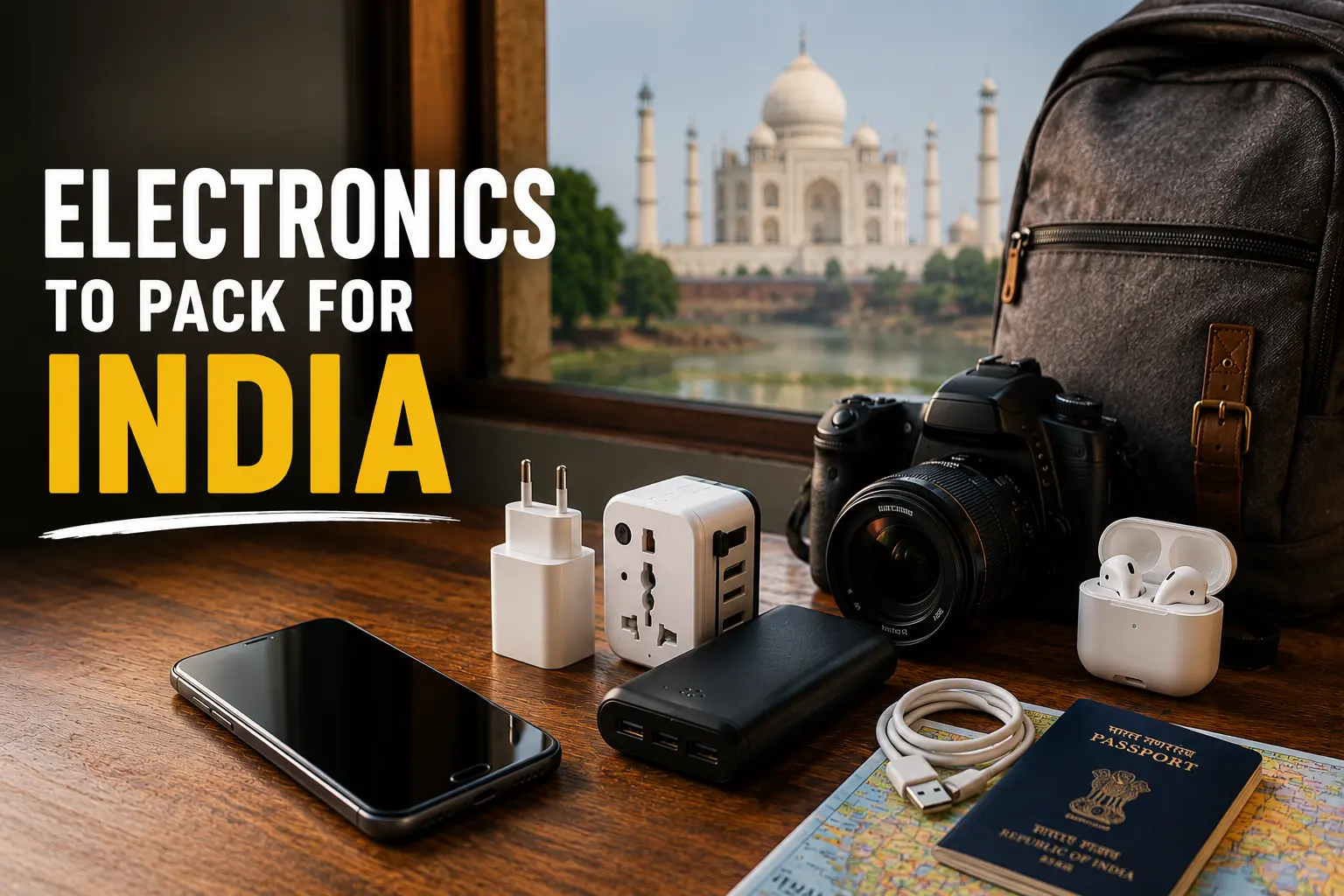
This guide covers every electronic item an international tourist actually needs in India — ranked by importance, with specific recommendations by country, honest notes on what gets damaged in India's power system, and a clear list of what to leave at home entirely.

Discover India's most spectacular wildlife destinations in this comprehensive 2026 safari guide. From the tiger reserves of Ranthambore and Bandhavgarh to Gir's Asiatic lions and Kaziranga's one-horned rhinos, learn the best time to visit, safari planning tips, and everything you need for an unforgettable wildlife adventure across India.
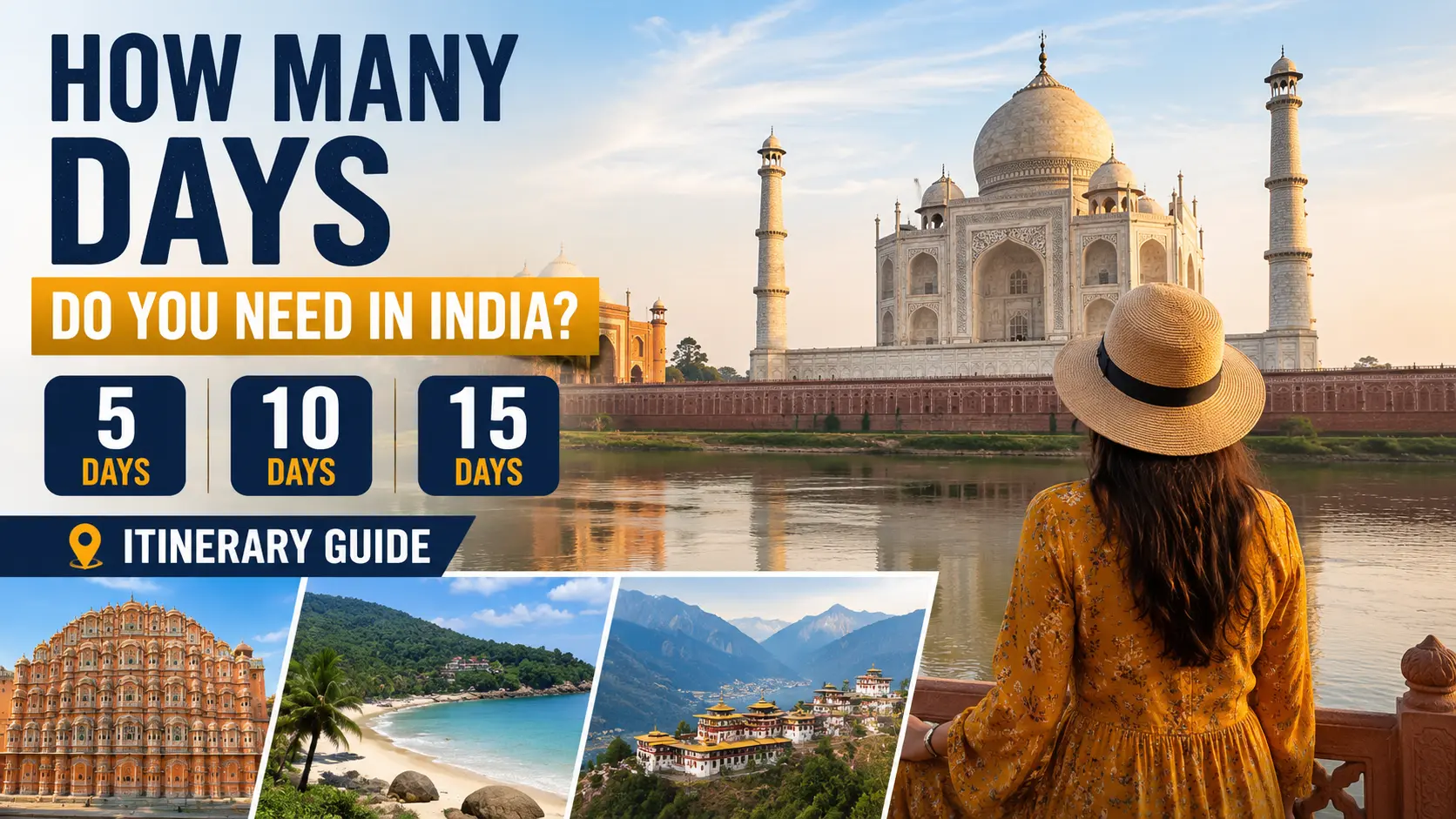
"Mukesh, how many days do I actually need in India?" It is the question that arrives in my WhatsApp from New York, London, Toronto, Berlin, and Paris — sometimes at very strange hours. And after ten years of designing India itineraries for hundreds of international guests, I have one consistent answer: Whatever number you have planned — add two more. This guide tells you exactly why — and gives you the honest, experience-based breakdown for 5, 10, and 15-day trips, with complete day-by-day itineraries for each.
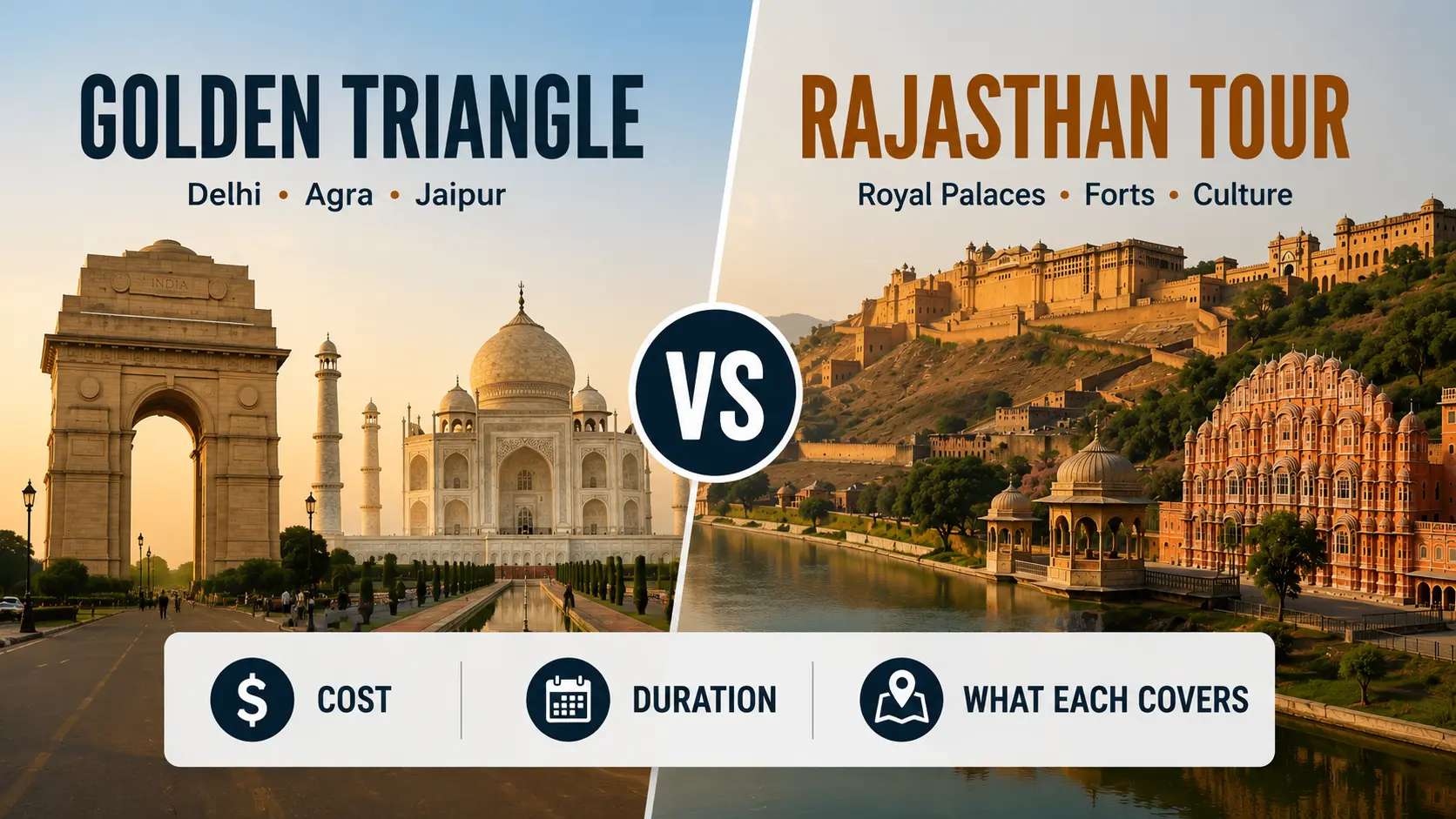
The Golden Triangle and Rajasthan are not competing tours —they are two chapters of the same story. One gives you the Taj Mahal and Mughal grandeur in 5 to 7 days. The other takes you deeper into desert forts, lake palaces, and camel safaris. This guide tells you which is right for your trip.